
 By Tsuky
Artificial intelligence can inspect software, suggest code and investigate possible vulnerabilities.
Giving an AI agent access to real hardware introduces another dimension: it can observe the outcome of experiments and potentially continue testing after failures.
That combination is central to ns2jb, the experimental Nintendo Switch 2 jailbreak developed by security researcher Sammy Hajhamid.
The project combines conventional vulnerability research, Codex agents and an automated physical testing environment.
Its results are technically significant, although the limitations are equally important: no persistence after reboot, no complete custom firmware and no general kernel-level compromise.
The research required a physical testing environment
Before investigating vulnerabilities, Hajhamid needed a way for AI agents to interact with actual consoles.
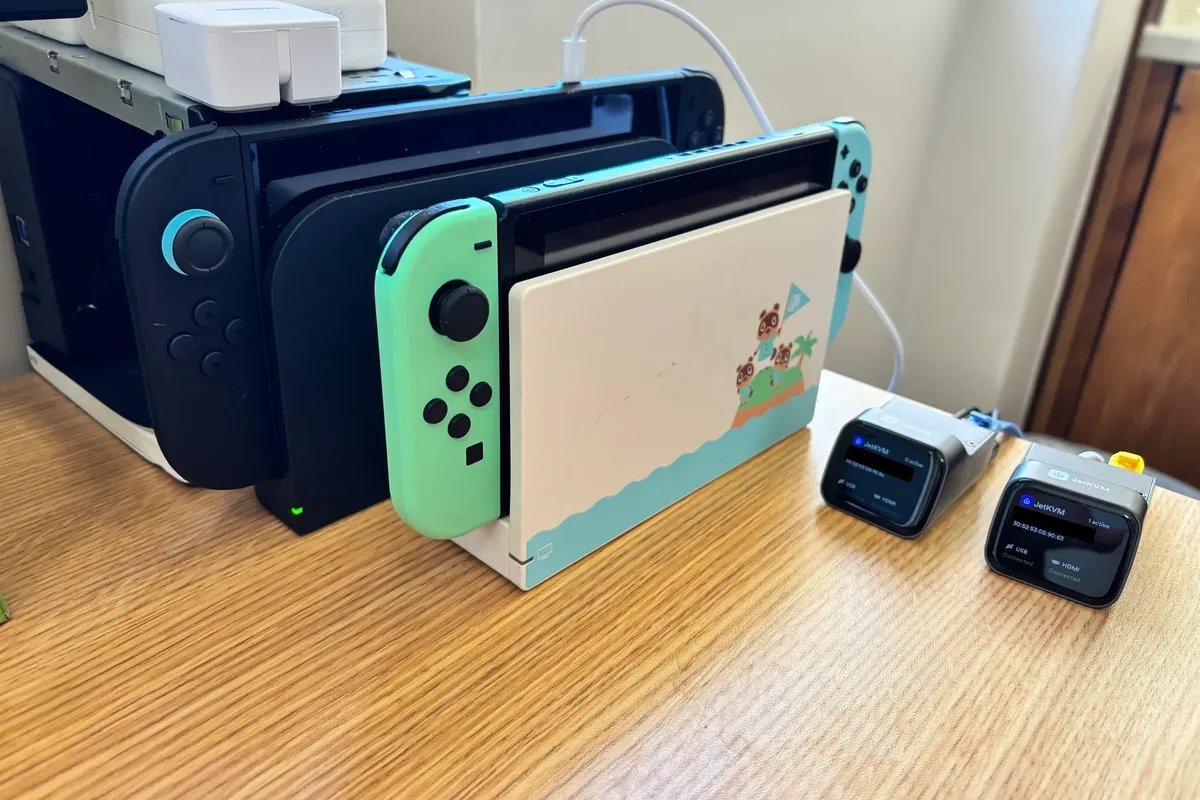
He built a setup including an original Nintendo Switch, a Switch 2 and two JetKVM devices.
The interfaces allowed controller inputs to be transmitted to the consoles while returning video output for observation.
A separate physical device could press a power button when a crashed console needed to restart.
This arrangement addresses a familiar difficulty in experimental security research.
A failed test may crash the target device, interrupting the next experiment until the system is recovered.
Automated recovery can make repeated trials more practical.
It does not remove the researcher's responsibility for choosing objectives, designing experiments and interpreting results.
The initial browser approach did not reach its goal
Hajhamid's technical account describes an initial focus on WebKit, a browser engine with a long history of security research.
The work encountered obstacles associated with existing memory and control-flow protections.
Rather than continuing exclusively along that route, the researcher explored applications originally designed for the first Nintendo Switch.
This decision illustrates the importance of human judgment in the project.
The change in direction was not evidence that the AI had autonomously completed the entire attack.
SmileBASIC provided a software entry point
The next target was SmileBASIC 4, a programming environment designed for Nintendo Switch and compatible with Switch 2.
Hajhamid reports that Codex discovered a 32-bit integer-overflow vulnerability in the software's BASIC interpreter.
Integer overflows can occur when arithmetic operations produce results outside the representable range of a data type.
When such calculations affect memory boundary checks, the resulting errors may permit unintended memory access.
The researcher describes obtaining access to regions of memory beyond the intended application boundaries.
The issue concerns a software implementation vulnerability rather than an ordinary feature of the BASIC programming language.
It also demonstrates how backward-compatible applications can become relevant to the security research of newer hardware.
The research then reached system services
An application-level vulnerability does not automatically grant access to privileged components.
Modern operating systems divide responsibilities between processes and services with different permissions.
Hajhamid continued his investigation into selected Switch 2 system modules.
His documentation describes a vulnerability involving file-path handling in the fs service, which participates in filesystem operations.
According to his account, this provided additional memory access capabilities and opportunities to investigate other system components.
The completed chain reportedly allows execution of native code using the permissions of certain ordinary system modules and the fs service.
These capabilities should not be confused with unrestricted kernel access or complete control over every hardware security mechanism.
A jailbreak is not necessarily complete control
The ns2jb method is tethered and nonpersistent.
It must be activated again after a console restart.
Hajhamid also identifies components that remain beyond the current technique's reach.
This is why describing the Switch 2 as completely unlocked would be misleading.
Executing code under selected system-module permissions is a substantial result, but it does not establish control over the secure boot process, the kernel or all privileged services.
The project is not equivalent to a mature custom firmware platform.
Codex contributed without replacing the researcher
The project's use of Codex has attracted considerable attention.
Hajhamid assigned different agents research tasks involving software inspection and vulnerability investigation.
Some explored approaches that did not succeed, while others identified useful vulnerabilities or software structures.
The researcher explicitly clarified that an initial attempt to make Codex autonomously achieve userland code execution had not succeeded.
He describes the complete jailbreak as requiring approximately two weeks of substantial effort.
This changes the interpretation of the accomplishment.
AI agents were used as research and experimentation tools within a process designed and directed by a human specialist.
Discovering a promising vulnerability does not mean that an agent independently understands or validates every consequence of exploiting it.
Mario Kart World demonstrates the outcome
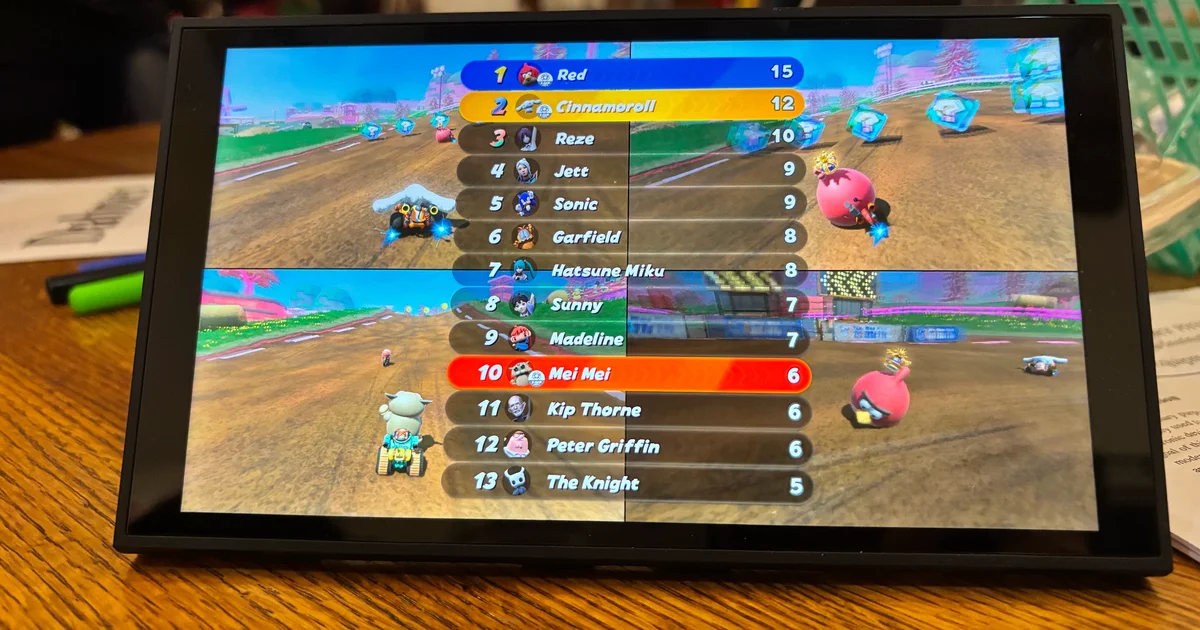
Hajhamid used Mario Kart World to illustrate the practical results of the exploit.
The published demonstration shows modified characters and race results on a real Nintendo Switch 2.
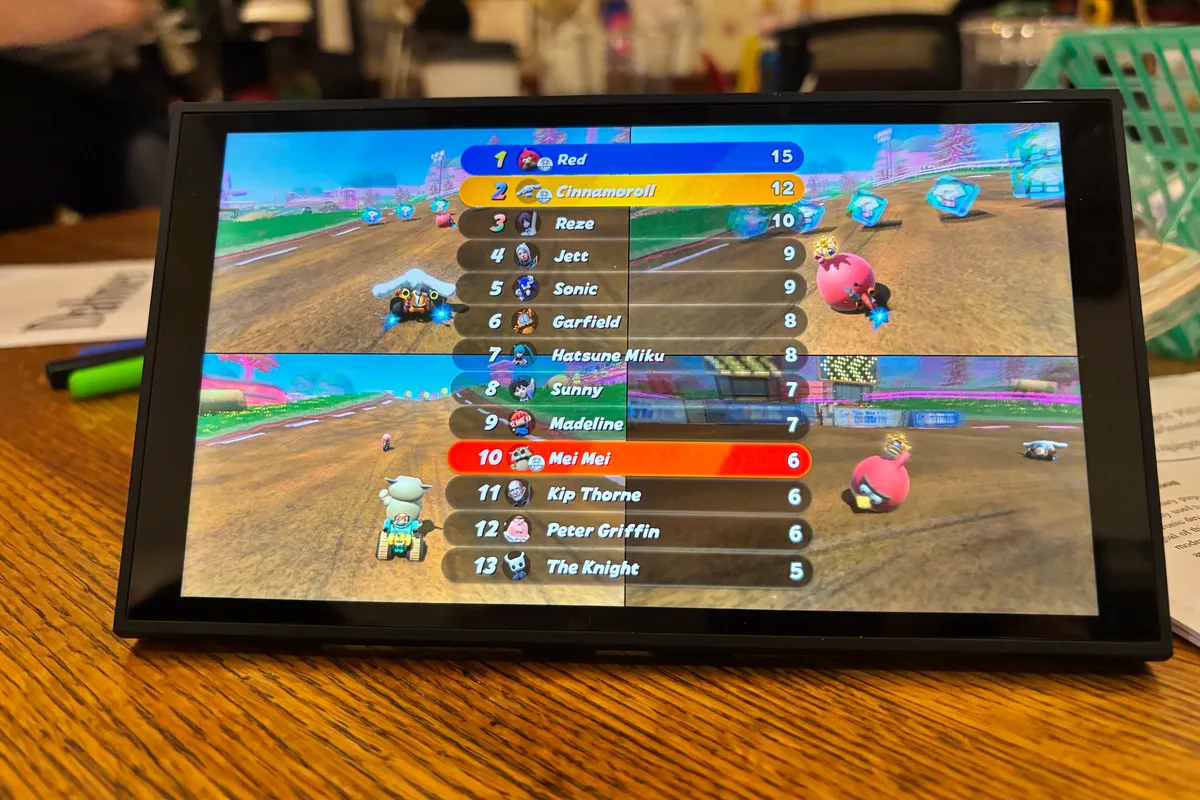
He reports that the game modifications were created with Codex assistance in approximately one day.
This highlights a distinction between discovering an exploit chain and creating modified content after obtaining useful technical access.
The second task can become substantially easier once the experimental groundwork has been completed.
The footage demonstrates modifications to a particular game, not universal compatibility with every Switch 2 title.
What the experiment reveals about AI security research
Many vulnerability research tasks involve repeated tests, code inspection, error analysis and the evaluation of competing hypotheses.
Automation can help with these activities, particularly when a test environment provides reliable feedback and recovery mechanisms.
Hajhamid's project demonstrates how multiple agents can work alongside a researcher using actual hardware.
However, it does not establish a general productivity multiplier or a measured advantage over other research tools.
No controlled comparison between AI-assisted and conventional security research was presented.
Success in one experimental project cannot automatically be generalized to every console or software platform.
Nintendo's response remains uncertain
Hajhamid reports that ns2jb works on firmware version 23.0.1.
Software vulnerabilities may be addressed by future updates, but the reviewed primary sources do not establish a confirmed Nintendo patch schedule.
The availability of technical documentation may enable further examination by other researchers.
It does not guarantee identical results across all systems or configurations.
The research also raises broader questions about independent vulnerability discovery, coordinated disclosure, user security and platform restrictions.
An important technical demonstration with clear limits
The ns2jb project provides a concrete example of AI-assisted vulnerability research reaching actual console hardware.
Its capabilities are substantial enough to support experimental software modification and further technical analysis.
Yet the jailbreak remains nonpersistent, incomplete and highly specialized.
The most important conclusion concerns the research process.
Codex did not replace a specialist who simply issued a request and received a working jailbreak.
Instead, AI agents contributed to a broader sequence of experiments, failed approaches, technical decisions and human-directed investigation.
That combination may be more significant for the future of security research than the unusual characters appearing in Mario Kart World.