
 By Tsuky
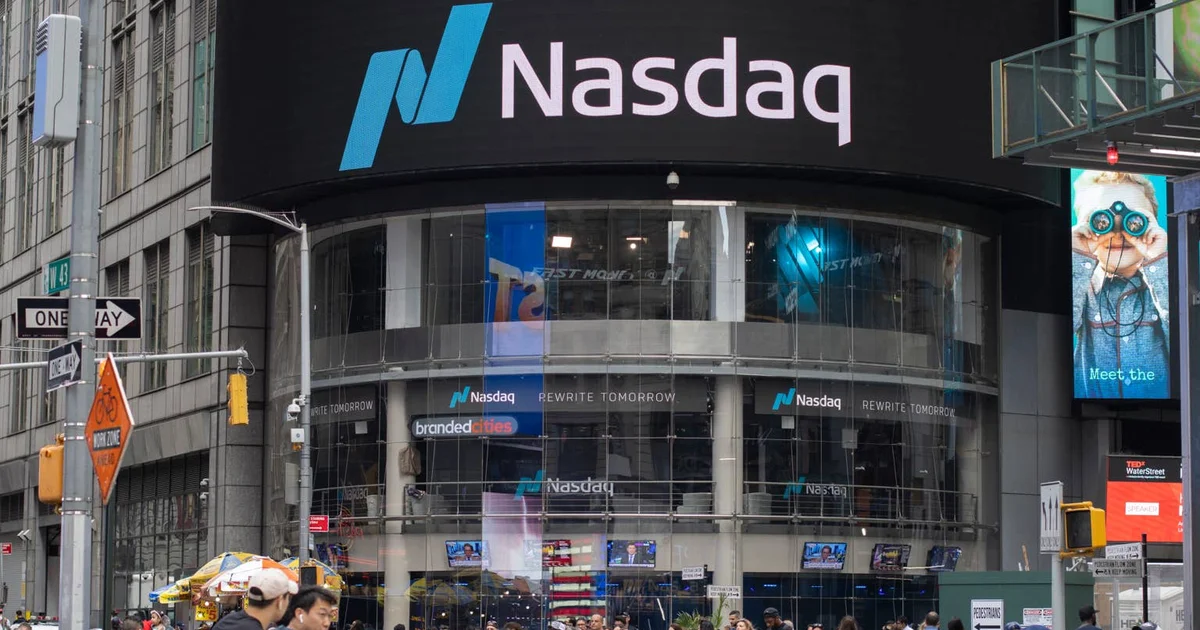
For much of the AI investment boom, announcements of additional infrastructure spending were generally treated as signs of future growth.
More data centers, more GPUs and greater computing capacity suggested opportunities for the technology industry.
The October 22 trading session demonstrated that investors are becoming more demanding.
US technology stocks suffered their sharpest daily decline in several months as corporate earnings and financing concerns revived questions about the economics of artificial intelligence.
The Nasdaq Composite fell 2.6% to close at 26,008.86.
The S&P 500 declined 1.21%, while the Dow Jones Industrial Average ended almost unchanged.
Semiconductor stocks were hit particularly hard, with the Philadelphia Semiconductor Index falling 6.7%.
The selloff was not simply a response to weak earnings.
Several companies reported results that exceeded expectations, but investors focused on the expenditure required to sustain future growth.
A difficult session for AI-linked stocks
The Nasdaq recorded its largest daily percentage decline since early June.
According to the Associated Press, the index lost approximately 694 points.
The S&P 500 fell 93.74 points to 7,663.43, its weakest daily performance since July.
The Dow Jones gained 11.89 points to close at 52,867.98, an increase of less than 0.1%.
The difference between these indexes is significant.
Selling pressure was concentrated in major technology companies that carry substantial weight in US equity benchmarks.
The Russell 2000 index of smaller companies actually finished slightly higher.
The Associated Press also reported that a majority of US stocks advanced during the session.
This was therefore not a uniform collapse across the entire American equity market.
It was primarily a sharp reassessment of several large businesses closely associated with artificial intelligence.
Meta falls roughly 7% despite beating earnings expectations
Meta was among the most closely watched companies during the selloff.
Its shares declined approximately 7% following quarterly earnings and new information about financing its AI investment program.
The issue was not simply disappointing revenue growth.
Meta's financial results exceeded several analysts' expectations.
However, investors focused heavily on the substantial resources required to build its computing infrastructure.
The company recorded a net cash outflow during the period amid significant AI-related expenditure.
It also announced plans for a new class of non-voting shares that could help raise additional funding.
The capital structure announcement was made on October 21.
The stock market reaction on October 22 represents a separate development.
It demonstrates that making additional financing available does not automatically satisfy shareholders.
Investors increasingly want to understand the cost of capital and the returns generated by major infrastructure projects.
When a company invests large amounts, shareholders want evidence that the expenditure will eventually produce sufficient additional earnings.
Meta operates a substantial advertising business, but even highly profitable companies face financial constraints when expanding capital-intensive operations.
Investors can believe in AI's long-term potential while questioning the pace or scale of current spending.
NVIDIA and semiconductor stocks suffer heavy losses
The selloff extended well beyond Meta.
NVIDIA, one of the central suppliers of AI computing hardware, declined approximately 4% to 4.4%, depending on the reported closing figures.
The company plays a major role in supplying the accelerators used to train and run advanced AI models.
When investors become concerned about hyperscaler spending, they may also reassess the outlook for the companies supplying that infrastructure.
Lam Research, which provides equipment used in semiconductor manufacturing, fell approximately 12%.
Its results and outlook contributed to pressure on a sector already sensitive to the technology investment cycle.
The Philadelphia Semiconductor Index ultimately dropped 6.7%.
That sharp decline does not mean orders for GPUs or chipmaking equipment suddenly collapsed.
Stock prices reflect expectations about future profits rather than only sales already completed.
A company can continue experiencing strong demand while its valuation falls if investors become less optimistic about the future.
This is particularly relevant for businesses whose share prices have risen sharply on expectations of sustained growth.
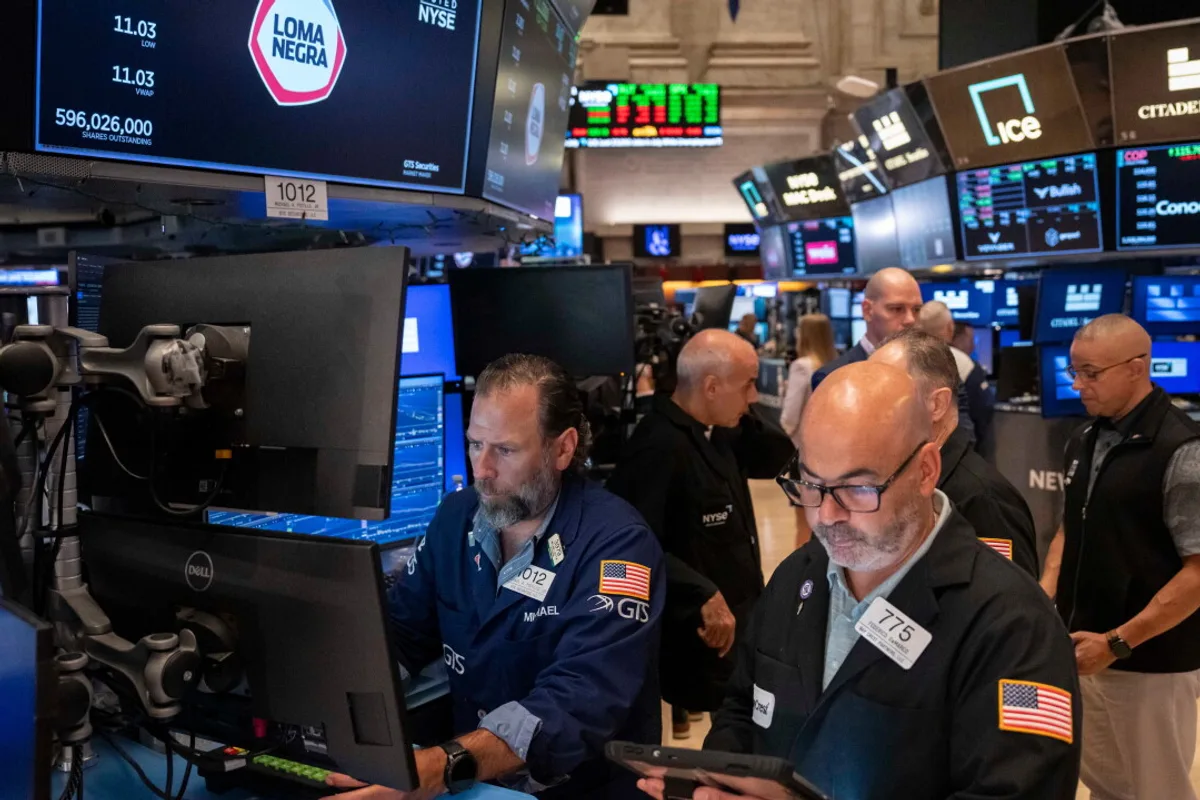
Return on investment has become the central concern
The AI industry depends on an expensive chain of infrastructure.
Advanced models require substantial computing resources for training and operation.
Operators must purchase accelerators, build data centers, secure power supplies and install cooling systems.
Networking equipment, software, maintenance and electricity add further expenses.
Together, these commitments can involve enormous amounts of capital deployed over several years.
The question for investors is no longer simply whether companies can build the infrastructure.
It is whether the resulting services will generate enough revenue to justify the spending.
Matthew Maley, chief market strategist at Miller Tabak, told Reuters that concerns about investment returns were central to the selloff.
One fear is that financial benefits may arrive later than previously expected.
That uncertainty can have a significant impact on stock valuations.
A company does not have to be financially distressed for its shares to decline.
Investors may simply revise their expectations of future growth or demand a greater return for accepting the risks involved.
The AI race has become a financing challenge
The cost of artificial intelligence development cannot be measured solely by GPU prices.
It also depends on how businesses finance their capital commitments.
Investment can be funded from existing profits, cash reserves, borrowing or new equity issuance.
Each approach has different implications.
A company generating substantial cash flow may finance part of its expansion internally.
But when capital expenditure consistently exceeds available resources, additional financing may be required.
Debt raises capital while adding interest expenses and repayment obligations.
Issuing shares can strengthen a company's financial resources but may change the economic position of existing shareholders.
That latter possibility is particularly relevant to Meta's announcement.
The proposed non-voting shares have renewed attention on how the company intends to finance its infrastructure expansion.
It is important to distinguish announcing a capital structure from actually completing a financing transaction.
The announcement does not establish that all potential future financing has already been raised.
Instead, investors are assessing the likelihood that continued spending will require additional capital.
Higher interest rates complicate the economics
Interest rates are another important part of the investment environment.
When borrowing costs remain elevated, financing large infrastructure projects becomes more expensive.
Higher capital costs can also reduce the present value of profits expected many years into the future.
Growth companies are particularly sensitive to this effect because a substantial portion of their valuations can depend on future earnings.
AI infrastructure often involves a significant delay between initial investment and revenue generation.
A data center must be financed, constructed, equipped and commissioned before it can deliver commercial computing capacity.
Even after opening, profitability depends on utilization, pricing and ongoing operating expenses.
Investors must therefore assess several uncertainties simultaneously.
Strong demand today does not guarantee every new facility will achieve satisfactory financial returns in future years.
Conversely, a sharp decline in technology share prices does not prove that future demand will be inadequate.
It may reflect a change in the level of risk investors are willing to tolerate.
AI infrastructure companies face different economic risks
The term AI stocks covers businesses with very different commercial models.
Meta develops digital platforms, models and computing infrastructure used across its products.
NVIDIA sells processors and computing technologies.
Lam Research supplies industrial equipment involved in semiconductor manufacturing.
Data center operators build, rent or operate computing infrastructure.
All may benefit from AI growth, but their financial exposures differ.
Equipment suppliers depend on customer orders, production costs and investment cycles.
Data center operators must also manage electricity expenses, infrastructure financing and capacity utilization.
Digital platforms seek to convert computing investment into products, usage and revenue.
These differences matter when interpreting market movements.
A shared decline does not mean all the affected businesses face identical financial risks.
Tesla declines despite positive free cash flow
Tesla also ended the session down approximately 3.1%.
The company had reported positive free cash flow and reduced its capital expenditure outlook for 2026.
Those developments could be interpreted positively by investors worried about excessive spending.
However, markets also considered the company's growth prospects and the pace of investment in artificial intelligence and robotics.
Lower planned expenditure can improve near-term financial flexibility.
It may also raise questions about how quickly certain technology projects can progress.
Both interpretations can be relevant.
The share price reaction does not mean Tesla reported uniformly poor results across every part of its business.
Instead, it illustrates the challenge of satisfying expectations for rapid technological expansion while demonstrating immediate financial discipline.
Oil prices and geopolitical tensions added pressure
AI investment concerns were not the only forces affecting markets.
Oil prices also rose sharply during the session.
Brent crude reached approximately $113.17 per barrel amid renewed geopolitical tensions in the Middle East.
Investors were concerned about potential supply disruptions and further pressure on energy prices.
A sustained increase in oil prices can contribute to inflation and complicate central bank decisions.
Electricity is also a significant operating expense for data centers, although power prices do not move mechanically in line with oil.
AI infrastructure economics depend on local electricity markets and the arrangements securing long-term power supplies.
Geopolitical uncertainty therefore adds another layer of risk to future cost estimates.
Investors also moved toward US Treasury securities during the session.
The resulting decline in Treasury yields partly reflected greater demand for perceived safe-haven assets.
The combination of earnings, financing concerns and energy market developments makes it inaccurate to attribute every movement in the Nasdaq solely to artificial intelligence.
Most US stocks actually finished higher
One of the most revealing features of the session was the divergence between major indexes and broader market performance.
Despite the decline in the S&P 500, a majority of US stocks advanced, according to the Associated Press.
The Russell 2000 also ended slightly higher.
This difference is partly explained by how major equity indexes are constructed.
Large companies carry significant weight in the S&P 500 and Nasdaq Composite.
Heavy losses among a relatively small number of highly valued companies can therefore pull an entire index lower even when many smaller businesses are rising.
The performance of a capitalization-weighted index is not equivalent to the percentage of its constituent stocks gaining value.
That distinction helps explain the trading session.
Investors were not necessarily selling every sector of the economy.
They were reducing exposure to some of the businesses most closely connected to expectations of continued AI investment growth.
Rotation into other market segments can reflect differences in valuation, risk and growth expectations.
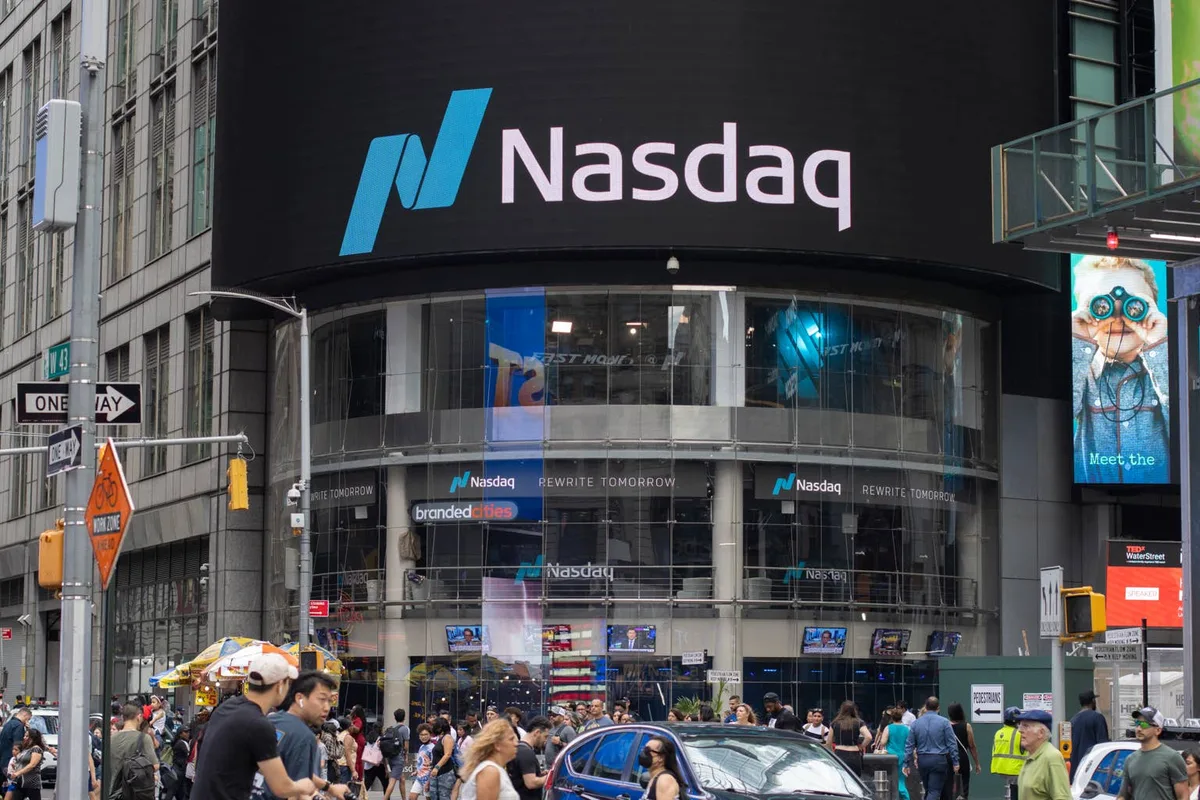
A market correction does not prove an AI bubble has burst
A sharp selloff inevitably raises comparisons with previous periods of technology market speculation.
However, a 2.6% Nasdaq decline does not by itself establish that an artificial intelligence bubble has burst.
Financial markets regularly experience corrections, including in industries with strong long-term economic prospects.
The important question is how valuations compare with the earnings that companies can realistically generate.
If AI infrastructure delivers substantial revenue and profits, some current investment levels may eventually prove justified.
If demand grows more slowly than installed computing capacity, returns may disappoint.
Rapid technological change makes those forecasts especially difficult.
New chip generations can improve performance while also accelerating the economic obsolescence of older equipment.
More efficient AI models may reduce the computing required for an individual operation.
At the same time, lower costs can stimulate additional applications and increase total demand.
These effects can push the market in different directions.
The October 22 decline reflects a reassessment of risk rather than a definitive conclusion about AI's future profitability.
What upcoming earnings reports will need to demonstrate
Several indicators will become increasingly important for companies investing in artificial intelligence.
The first is their ability to convert capital expenditure into additional revenue.
Sales growth needs to be assessed alongside the spending required to support it.
The second is cash flow.
A business can report substantial accounting profits while spending more cash on investments than it generates during a particular period.
The third indicator is return on invested capital.
This helps assess whether a project delivers an adequate economic return relative to its cost.
For data center operators, equipment utilization, customer commitments and power expenses will also matter.
For semiconductor suppliers, order books, profit margins and equipment replacement cycles provide additional evidence about demand.
Financing arrangements will remain another area of scrutiny.
Debt issuance and new share offerings can affect investors even when the funded projects have strategic value.
Future quarterly results will help determine whether the concerns visible on October 22 translate into a lasting change in industry expectations.
Wall Street is not rejecting AI, but it wants evidence
The October 22 session produced a clear set of market results.
The Nasdaq fell 2.6%, the S&P 500 declined 1.21% and semiconductor stocks lost 6.7%.
Meta, NVIDIA and several other AI-linked businesses faced substantial selling pressure.
But the wider US market did not decline uniformly.
Some companies continued reporting strong earnings, and several market segments proved resilient.
The session is therefore better understood as a reassessment of expectations than proof that artificial intelligence has stopped being an important growth market.
The essential distinction is between technological expansion and economic value creation.
Building more data centers increases available capacity. It does not guarantee that every dollar invested will generate an adequate return.
The question Wall Street is now directing at technology giants is less exciting than another GPU launch or a more powerful model announcement.
It is also harder to avoid: how much will the next stage of the AI industry cost, how will it be financed, and when will it begin to pay for itself?