 By Adri
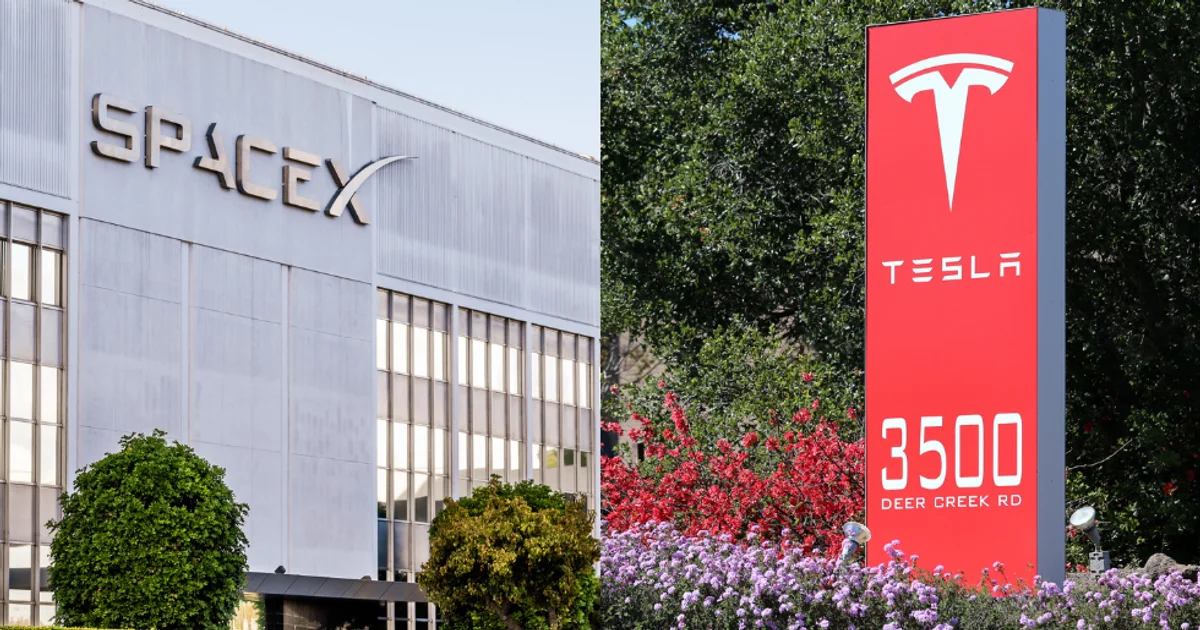
A merger between Tesla and SpaceX is no longer simply an idea discussed by analysts.
Both companies have established special committees to examine a potential combination.
However, exploratory discussions should not be confused with a definitive agreement.
On October 20, Elon Musk confirmed that the companies' boards had formed committees of independent directors to consider a merger.
Two days later, SpaceX clarified that any eventual transaction would require approval from its special committee, board and controlling shareholder.
The October 22 disclosure is the latest significant development.
It confirms that Musk retains a decisive formal role even though he says he is not participating directly in negotiations.
No final proposal, exchange ratio or completion timetable has been announced.
Independent committees must negotiate around a powerful shareholder
The special committees were created to address conflicts of interest.
Musk serves as chief executive of both Tesla and SpaceX and holds significant ownership stakes in each company.
In a conventional acquisition, buyers and sellers usually have different financial objectives.
A buyer wants favorable terms, while a seller generally seeks to maximize the value received.
Musk has financial interests on both sides of a potential transaction.
A merger could change the value of his holdings, the governance of the combined company and the economic rights of other shareholders.
Independent committees are intended to examine those issues on behalf of the companies and their investors.
Musk says he is excluded from the committees' direct discussions.
However, SpaceX has now expressly stated that its controlling shareholder must approve any combination.
Negotiating a deal and approving its final terms are different functions.
A shareholder may stay outside negotiations while retaining the right to approve or reject the resulting proposal.
That distinction does not automatically establish a legal contradiction.
It does illustrate how difficult it can be to demonstrate procedural independence when the same individual has substantial influence over both companies.
The $3.5 trillion figure is not a negotiated merger price
The potential size of the transaction has attracted considerable attention.
Reuters describes a possible combination worth around $3.5 trillion based on the companies' market valuations.
That figure is not an agreed acquisition price.
It is an approximate value derived from the businesses' capitalization and merger scenarios.
Several transaction structures remain theoretically possible.
One company could acquire the other, or a new holding structure could be created.
An all-stock or largely stock-based transaction would require a share exchange ratio.
That ratio would determine how much ownership each group of existing shareholders receives in the combined business.
The decision is particularly sensitive given the companies' size and very different activities.
Even a relatively modest change in Tesla's valuation could shift tens of billions of dollars in economic value between investor groups.
Analysts disagree about whether Tesla shareholders should receive a substantial premium.
Published scenarios range from little or no premium to approximately 35%.
These are financial market estimates, not terms agreed by the negotiating committees.
Musk's public support has raised concerns about the process
Musk has openly supported the idea of bringing Tesla and SpaceX together.
During SpaceX's October 20 earnings call, he described a merger as strategically attractive.
He also cautioned that a transaction was far from certain.
According to Reuters reporting published on October 22, his public endorsement has worried some people involved in the discussions.
A source with direct knowledge of the process said the comments could increase shareholder scrutiny and potentially delay negotiations.
The concern involves the perceived independence of the committees.
When an influential controlling shareholder publicly expresses a preference before negotiations are complete, other investors may question whether the decision-making process is genuinely independent.
These concerns were reported by Reuters.
They are not findings of misconduct established by a court.
Publicly supporting a transaction does not automatically mean manipulating its terms.
However, procedural transparency becomes especially important when two companies share the same chief executive and major shareholder.
The SolarCity acquisition remains a relevant precedent
Tesla's corporate history illustrates the legal sensitivity of transactions involving Musk-related companies.
In 2016, Tesla acquired SolarCity, a solar energy business with significant connections to Musk.
The transaction led to years of litigation concerning conflicts of interest, valuation and the executive's role in the deal.
Reuters reports that some participants see procedural similarities between that acquisition and the current discussions.
The situations are not identical.
SpaceX is a publicly traded business spanning space launch, satellite communications and AI infrastructure.
Tesla operates in automotive manufacturing, energy storage, robotics and software.
The companies' scale and regulatory environments also differ from those involved in the SolarCity transaction.
The relevant comparison concerns the difficulty of protecting unaffiliated shareholders when one executive has strong interests in both businesses.
The independent committees are intended to address those concerns.
Their existence does not guarantee shareholder approval or eliminate the possibility of future legal challenges.
Tesla shareholder approval could be a major hurdle
Musk has identified Tesla shareholder approval as a significant obstacle.
According to comments reported by TechCrunch, he said the deal would require support from at least half of all Tesla shareholders, rather than merely a majority of votes cast.
That distinction matters.
When shareholder turnout is limited, winning most votes actually cast does not necessarily amount to receiving support from a majority of all outstanding shares.
The threshold described by Musk would require wider shareholder participation.
Tesla investors would also need to understand the exposure they would receive to SpaceX's businesses.
They would be exchanging an investment in an automotive, energy and robotics company for ownership in a more diversified entity.
The precise voting requirements will depend on the eventual legal structure of the transaction.
Because no final structure has been announced, not every detail of a future shareholder vote can yet be treated as settled.
SpaceX has its own approval requirements
SpaceX's ownership structure is different from Tesla's.
Following its June 2026 public listing, Musk retained majority voting power at the company.
That gives him considerable influence over decisions requiring shareholder approval.
The October 22 regulatory disclosure confirms that a potential combination would require the approval of its controlling shareholder.
The stated steps also include review by the special committee and approval by the board.
This does not mean Musk has formally approved a specific transaction.
No definitive agreement currently exists for him to approve.
Supporting a merger in principle is different from accepting a negotiated set of financial and governance terms.
Tesla and SpaceX are increasingly connected through AI
The two companies operate in different industries, but some of their technological requirements are converging.
Tesla develops autonomous vehicles, humanoid robots, batteries and AI computing systems.
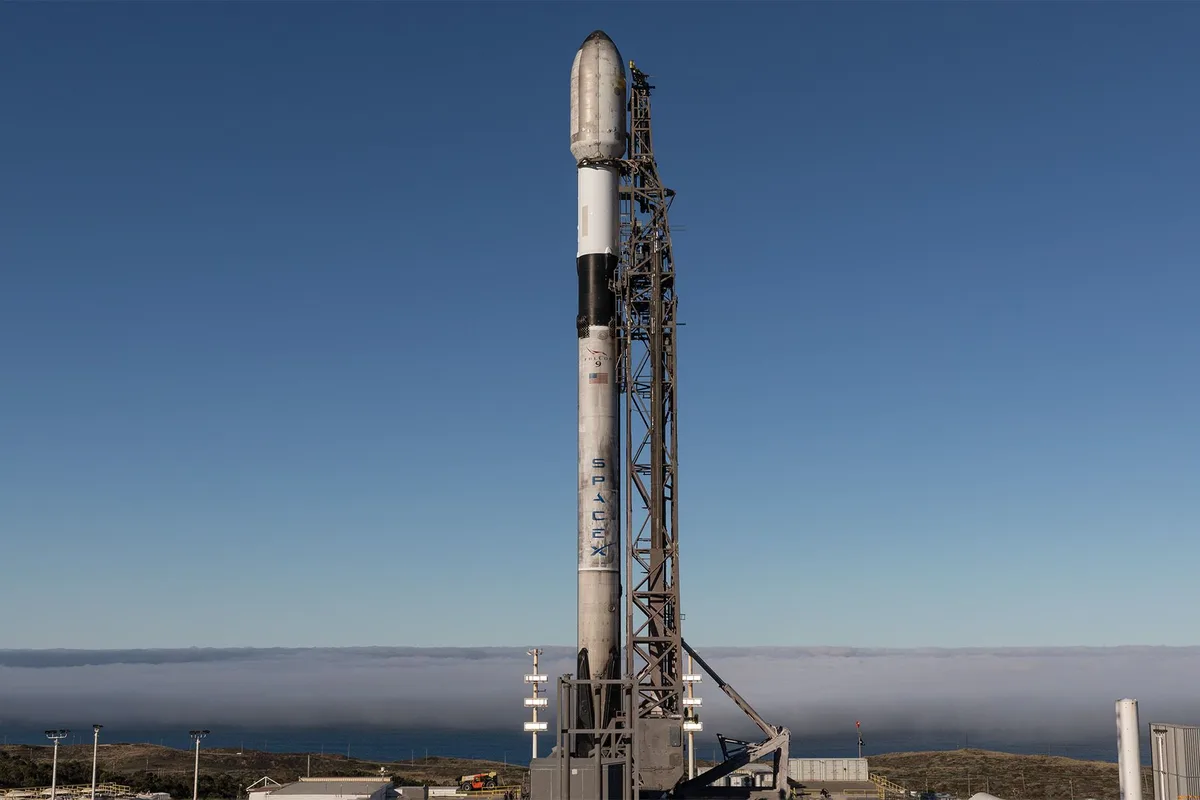
SpaceX operates rockets, satellite networks and increasingly substantial artificial intelligence infrastructure.
Musk argues that combining the companies could improve coordination between these activities.
A common structure might simplify certain investments or reduce administrative complexity associated with cooperation between separate businesses.
However, industrial mergers do not automatically produce savings.
Actual benefits depend on technical compatibility, operating requirements and integration costs.
Companies can also cooperate extensively without merging their legal entities.
The central question is which advantages would genuinely require full corporate consolidation.
Terafab demonstrates an existing partnership
Tesla and SpaceX are already cooperating on Terafab, an industrial semiconductor initiative.
The project is intended to strengthen their capacity to develop and manufacture certain components required for advanced computing and autonomous systems.
Both companies have potential uses for specialized processors.
Autonomous vehicles require onboard computing, while humanoid robots need hardware suited to their operating requirements.
SpaceX's computing and space infrastructure creates different demands.
A corporate combination might support closer coordination.
But there is no publicly established evidence that a merger would necessarily be more efficient than the existing industrial partnership.
Terafab demonstrates that cooperation is already possible.
It does not establish that a merger is inevitable or commercially justified.
AI is changing SpaceX's business profile
SpaceX's growing AI business is another reason analysts have become interested in a possible combination.
The company is no longer focused exclusively on rockets and Starlink satellite broadband.
It also operates expanding computing infrastructure associated with artificial intelligence.
During its third-quarter earnings release, SpaceX reported $14.6 billion in revenue and $4.4 billion in quarterly profit.
Its AI activities now represent the largest revenue segment, according to the results.
Starlink remains an important profit contributor.
These developments make the company resemble a broader technology infrastructure provider.
They also involve substantial investment requirements.
SpaceX expects to spend another $35 billion to $40 billion during the fourth quarter to support expansion.
Those amounts are forecasts rather than expenditure already completed when the guidance was issued.
A merger could alter how future investment requirements are allocated within a combined company.
It could also expose Tesla shareholders more directly to capital-intensive programs outside the automotive business.
Investors would be combining very different businesses
Tesla remains an industrial company with significant exposure to vehicle production and sales.
It also operates businesses in batteries, energy and software.
SpaceX combines launch services, satellite telecommunications, government contracts and computing infrastructure.
These businesses have different financial cycles.
Automotive manufacturing depends on consumer demand, production costs and global competition.
Space activities depend on launch schedules, regulation and institutional customers.
AI infrastructure requires substantial initial investment and sufficient utilization to generate attractive returns.
Combining these activities could diversify revenue.
However, diversification does not eliminate the risks associated with each business.
It could also make the resulting company more difficult for investors to value.
The relative valuation of the different businesses will therefore be central to the committees' work.
China and US government contracts add regulatory complexity
A potential merger would also face regulatory questions.
SpaceX maintains important commercial and contractual relationships with US government agencies.
Tesla has a substantial manufacturing presence in China through its Shanghai factory.
Combining the companies could therefore raise questions about sensitive information, ownership structures and the relationship between commercial and government operations.
The applicable requirements would depend on the transaction structure and the authorities involved.
It would be premature to claim that a merger would necessarily be blocked on national security grounds.
No such regulatory decision has been announced.
Still, the issues may extend beyond conventional competition analysis.
Authorities could examine corporate control, information access and contractual obligations associated with the different businesses.
The companies' international exposure adds another reason why a strategic idea should not be confused with an executable transaction.
Analysts see strategic logic but disagree on price
Several financial analysts consider a Tesla-SpaceX merger strategically plausible.
Some have suggested that a transaction could occur during 2027.
These are analyst forecasts, not an official timetable.
Estimates also vary substantially on financial terms.
Tesla shareholders may seek a premium to participate in a company with a broader range of businesses.
SpaceX investors could object to giving Tesla an excessively generous valuation.
The committees will need to evaluate current market prices, growth expectations and the companies' assets.
The share exchange ratio will be especially sensitive because of the scale of the transaction.
Voting rights and future corporate governance will matter as well.
A merger is more complicated than adding together two market capitalizations.
It requires an agreement about who controls the new organization and how its economic benefits are distributed.
No merger has been approved
As of October 23, 2026, the confirmed facts are limited but significant.
Tesla and SpaceX have created special committees to evaluate a potential combination.
Musk publicly supports the idea but says he is not participating in direct negotiations because of conflicts of interest.
SpaceX has clarified that any transaction would still require his approval as controlling shareholder.
The committees have not announced a favorable decision or signed a merger agreement.
The $3.5 trillion figure and potential shareholder premiums remain market estimates and scenarios.
The next meaningful development would be the presentation of actual terms, including valuation, exchange ratios, governance and approval requirements.
Those details would allow shareholders to assess whether combining the companies offers advantages over maintaining their existing partnerships.
The case raises a broader question about Musk's industrial empire.
Tesla and SpaceX are becoming increasingly connected through artificial intelligence, energy and infrastructure.
But technological convergence does not automatically resolve questions about price, governance and investor protection.
Musk favors bringing the companies together. The real test will be whether independent decision-makers can demonstrate that a merger would also serve the interests of other shareholders.