 By Tsuky
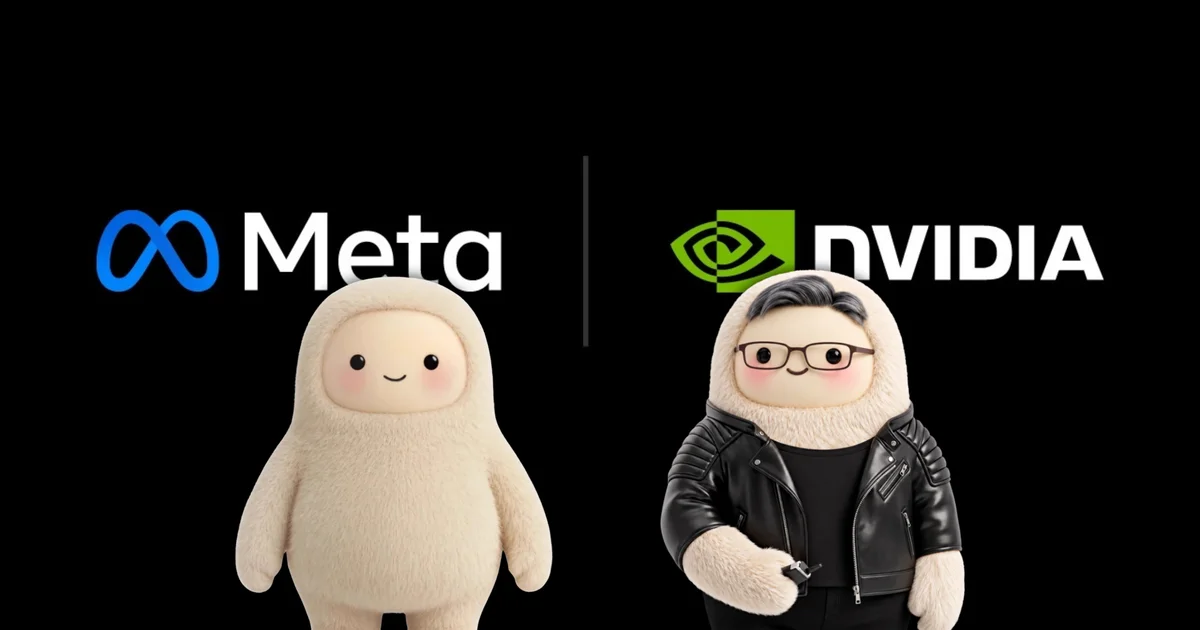
NVIDIA is preparing to invest $3 billion in Meta, but the more technically significant part of their latest agreement concerns how AI agents will be built, deployed and operated at scale.
The two companies want to expand their collaboration on Muse, Meta's personal AI agent, and the family of models that powers it. That includes work on training, inference performance and complete agent workflows rather than focusing exclusively on the speed of individual model requests.
Meta also intends to deploy more NVIDIA infrastructure, including Vera Rubin systems, Vera processors, Spectrum-X Ethernet networking and BlueField-4. The announcement outlines a broad technical direction, although it does not specify additional hardware volumes, installation dates or measured efficiency gains from the new work.
Muse makes complete task execution the important metric
Meta introduced Muse in September as a personal agent designed to carry out tasks across applications and services. Its purpose extends beyond generating answers in a conversation. The system can work through a series of actions using tools and permissions granted by its user.
That creates a more complicated computing workload than a single chatbot response. An agent may need to retrieve documents, interpret instructions, execute code, communicate with external services and reconsider its plan after receiving new information.
Each operation introduces latency and potentially additional computing expense. A faster model response might improve one part of the workflow without producing an equally large reduction in the time required to complete the entire task.
NVIDIA and Meta say their cooperation will address these broader processes. The announced goal is to improve the performance of training and inference while optimizing the total cost of ownership of the systems involved.
Meta and NVIDIA point to strong model benchmarks and growing consumer adoption of Muse. However, the latest announcement does not provide a detailed independent comparison of Muse's reliability, operating costs and task-completion performance against competing agents.
Why Vera CPUs matter alongside Rubin GPUs
Large AI systems need different kinds of processors for different tasks. GPUs handle highly parallel computations used in model training and inference. CPUs remain important for scheduling, tool execution, data handling and other operations surrounding model calls.
Agent workloads make that distinction especially relevant. A system that alternates between reasoning and external actions cannot be optimized solely by increasing GPU compute throughput.
NVIDIA's infrastructure strategy combines accelerators, server processors, networking and software into a broader computing platform. Meta intends to expand its deployment of Vera Rubin and Vera CPUs to improve the performance and energy efficiency of future agent workloads.
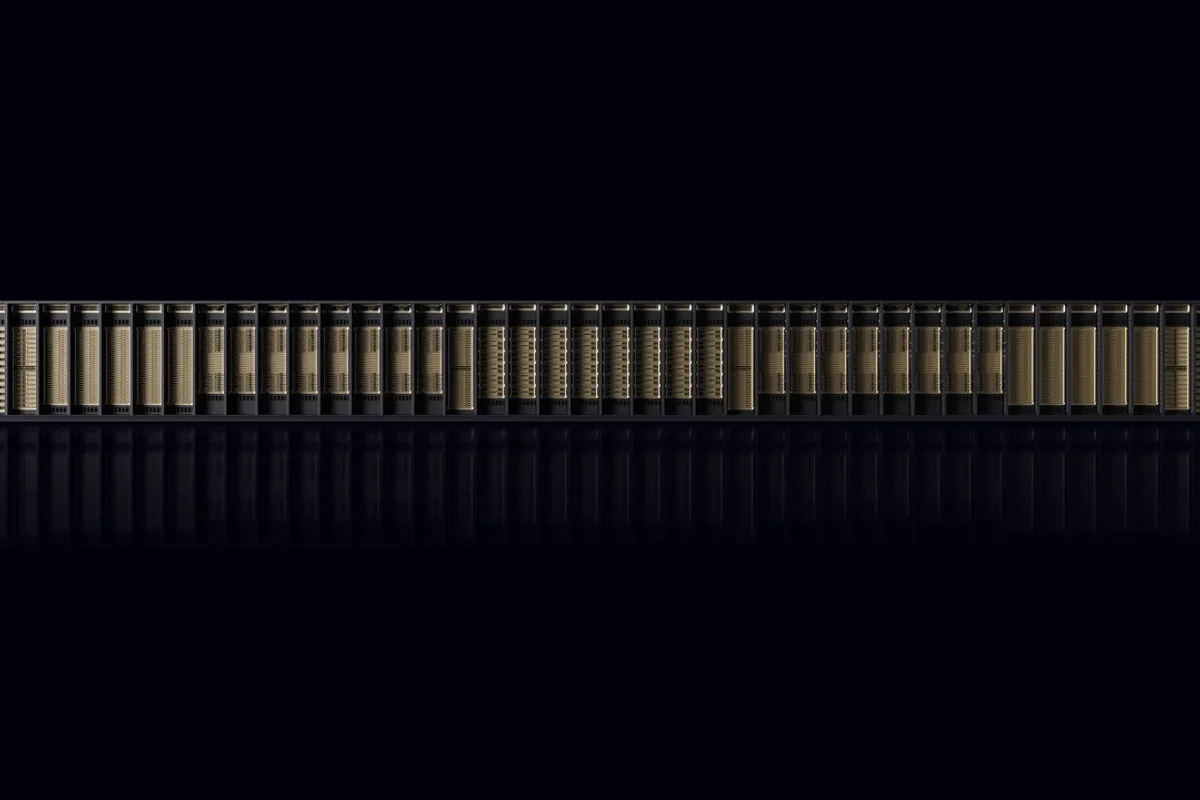
The agreement does not quantify the additional computing capacity Meta plans to install. It also provides no new independently verified performance-per-watt comparison for the planned deployment.
Efficiency improvements should not automatically be interpreted as lower overall electricity consumption. If agents become cheaper to operate and demand rises accordingly, total infrastructure activity may continue increasing even as individual operations become more efficient.
Networking becomes part of the AI performance equation
Meta is also expanding its use of NVIDIA Spectrum-X Ethernet and BlueField-4. These technologies address the movement and processing of data across large computing installations.
Training large models and serving distributed AI workloads can require substantial communication between processors, accelerators and storage systems. Delays in these exchanges can reduce the effective utilization of expensive hardware.
Spectrum-X is designed for Ethernet networking in accelerated computing environments, while BlueField provides dedicated infrastructure processing capabilities. Together, they represent another part of NVIDIA's strategy to optimize AI systems beyond the accelerator itself.
For operators, improving the utilization of existing hardware can be as consequential as adding more capacity. The cost of an inference service depends on networking efficiency, scheduling, memory and operational overhead in addition to raw model computation.
The announcement identifies the technologies Meta plans to adopt more extensively, but does not describe the complete topology or operating characteristics of the resulting infrastructure.
OpenShell and Sentry are possibilities, not shipped Muse features
The partnership may eventually extend to NVIDIA's OpenShell Reference Architecture and Sentry technology. The companies describe these as areas for possible additional cooperation, rather than completed integrations.
OpenShell focuses on safer agent deployment, while Sentry is intended to help monitor agent behavior. Both address problems that emerge when software is authorized to take actions on behalf of its users.
A conventional assistant can generate an incorrect answer. An agent with access to connected tools can also perform an incorrect action, expose sensitive information or follow malicious instructions embedded in external content.
Reliable agent security therefore requires more than filtering conversational output. Isolation, permission boundaries, audit logs, credential handling and controls over external actions become part of the system architecture.
Meta says Muse already operates through a dedicated secure computing environment called Muse Secure VM, with its own browser and permissions controlled by the user.

That design provides a framework for separating agent activity from ordinary application access, but it does not eliminate every risk. The effectiveness of specific protections depends on implementation details, permission management and how agents handle untrusted information.
Neither company has announced that OpenShell or Sentry is already deployed as part of Muse. No rollout date or detailed integration specification was provided.
The investment deepens an existing infrastructure relationship
NVIDIA's proposed $3 billion equity investment accompanies Meta's wider efforts to finance substantial AI infrastructure expansion. The companies already work together across multiple generations of accelerated computing systems.
From NVIDIA's perspective, closer software and hardware optimization can strengthen the value of its platform to one of the industry's largest AI infrastructure operators. Meta, meanwhile, is seeking improvements in model performance, operating efficiency and the capacity available for future services.
The investment should not be treated as a $3 billion GPU purchase. It is a planned participation in Meta's equity offering, and the companies have not disclosed that the entire amount will be allocated to Muse development or NVIDIA hardware procurement.
Nor does the deal establish NVIDIA as Meta's exclusive hardware supplier. Meta continues to pursue infrastructure strategies involving other technology providers.
The announced investment is subject to the applicable conditions of the financial transaction. NVIDIA also identifies future infrastructure deployments and performance expectations as forward-looking statements rather than guaranteed outcomes.
What remains unknown for Muse users
Muse was introduced as a consumer-facing personal AI agent before this partnership expansion. The October announcement is therefore not a product launch.
NVIDIA and Meta have not presented a new Muse version resulting from their expanded collaboration, nor have they specified an immediate change to consumer subscriptions, usage limits or supported features.
Faster inference and more efficient infrastructure could eventually improve responsiveness and the economics of complex tasks. But the user-facing benefit will depend on how effectively the entire agent workflow is optimized.
An agent may become faster at each model call while performing more calls and tool operations to complete a task. Measuring the total cost and elapsed time of successful task execution will be more informative than looking at isolated accelerator benchmarks.
For now, the confirmed changes are an expanded technical partnership, Meta's intended infrastructure deployments and NVIDIA's proposed investment. The companies have not disclosed a delivery date for new Muse capabilities produced through this work or a quantified reduction in cost per completed agent task.