
 By Tsuky
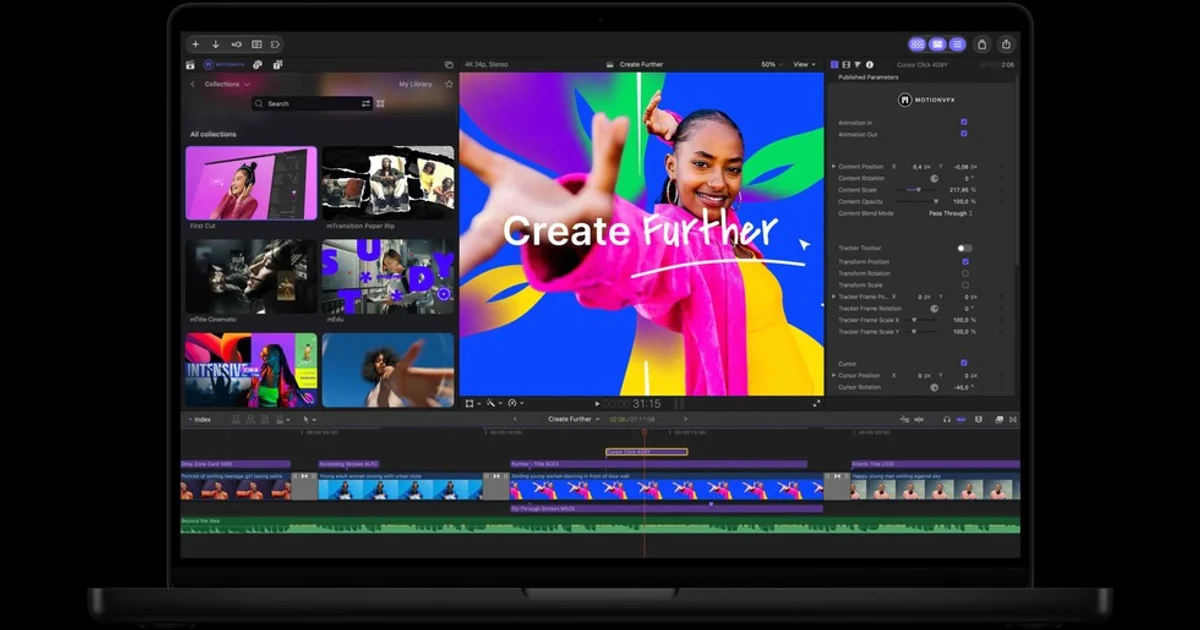
Apple is expanding Creator Studio beyond a collection of creative applications and premium content. Its upcoming update introduces deeper connections between programs and new ways for AI systems to interact with documents, images and production workflows.
The additions are not all variations of the same feature. Pixelmator Pro gains image generation tools, Logic Pro receives an assistant intended to help organize music production, and Final Cut Pro adds professional motion graphics content. Pages, Numbers and Keynote are taking a different route, opening parts of their functionality to external AI agents through MCP.
That last development may be the most consequential technical change. Instead of generating instructions for a user to apply manually, compatible agents can interact directly with supported application operations.
MCP turns productivity apps into agent-accessible tools
Apple is adding Model Context Protocol support to Keynote, Pages and Numbers on the Mac. MCP provides a structured way for compatible AI systems to communicate with applications and available tools.
With suitable integrations, agents can read information, make edits and automate supported actions inside documents, spreadsheets and presentations.
These capabilities go beyond ordinary text generation. Editing a spreadsheet or restructuring a presentation requires identifying the correct content, performing a supported operation and preserving the surrounding document.
Apple says MCP support will require macOS 27 or later. It has not announced equivalent MCP functionality across all mobile versions of the applications.
The three productivity apps are also gaining contextual assistants built using Apple and OpenAI models. Keynote's assistant is intended to help design and animate presentations, Pages can draft and reorganize text, and Numbers can generate tables, recommend charts and work with document data.
These assistants are initially available in beta and in U.S. English only. They require Apple Intelligence-capable devices running supported versions of iOS 27, iPadOS 27 or macOS 27.
Keynote also introduces the Keynote Interchange Format, or .keyx, an open JSON-based format designed to support external tools, automated workflows and programmatic access to presentations.
Generate Fill brings editable AI changes to Pixelmator Pro
Pixelmator Pro is introducing Generate Fill, allowing users to select part of an image and describe a change in natural language.
Apple says the feature attempts to match generated content to the lighting, perspective and textures of the surrounding image. It works with existing selection tools, including free, quick and magnetic selections.
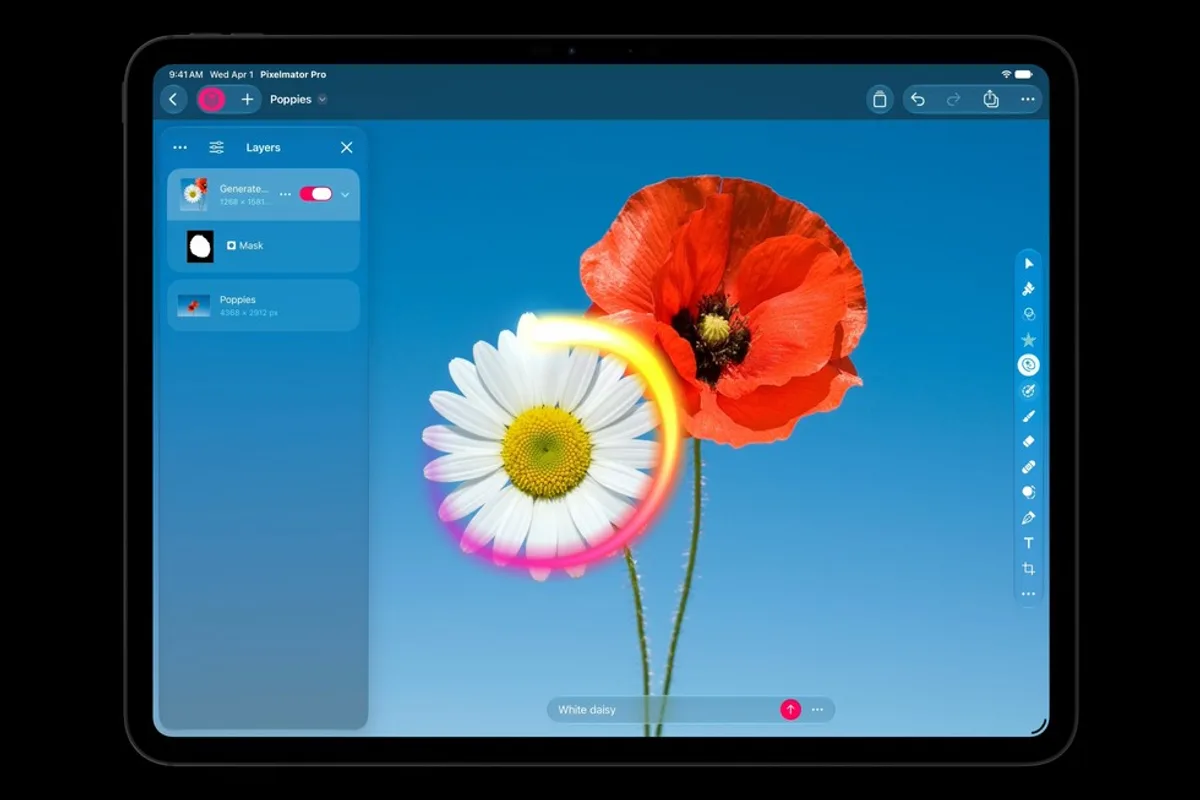
Generated content can be placed into layers and refined using intelligent masks. This helps preserve an editable workflow instead of forcing users to accept a single flattened result.
Super Resolution can also upscale generated elements. The practical image quality will still depend on the source material, the complexity of the requested change and how accurately the generated content fits the original composition.
Final Cut Pro is gaining closer Pixelmator integration as well. Images can be opened from an editing timeline, modified in Pixelmator and updated automatically in the Final Cut Pro project.
Logic Pro combines an AI assistant with local audio analysis
Logic Pro for Mac is getting an intelligent assistant powered by Apple-built and third-party models. Apple presents it as a way to navigate production tools, create project setups and work with existing musical arrangements.
The announced examples include starting a song project and setting up a vocal track through a written prompt. The company has not demonstrated that the assistant can independently deliver every stage of a completed professional music production.
The assistant requires macOS 27 on an Apple Intelligence-capable Mac and will initially support U.S. English only.
Logic Pro's redesigned Browser brings loops, instruments, effects and other sounds into a centralized interface. An on-device music understanding system analyzes and categorizes imported audio, supporting searches based on musical content.
The updated Stem Splitter can also isolate and rebalance individual drum components without requiring the original multitrack recording. That could assist remixing and postproduction, although separation quality will depend on the source mix.
Apple is additionally updating the visual design of Logic Pro with Liquid Glass interface elements across Mac and iPad.
MotionVFX expands Final Cut Pro's built-in production tools
Final Cut Pro for Mac will include thousands of MotionVFX effects, transitions, templates, titles and motion graphics elements.
The integration also covers advanced workflows including rotoscoping, tracking and color grading. Apple's Content Hub will become accessible directly within Final Cut Pro, with a collection of stock video, images and backgrounds.
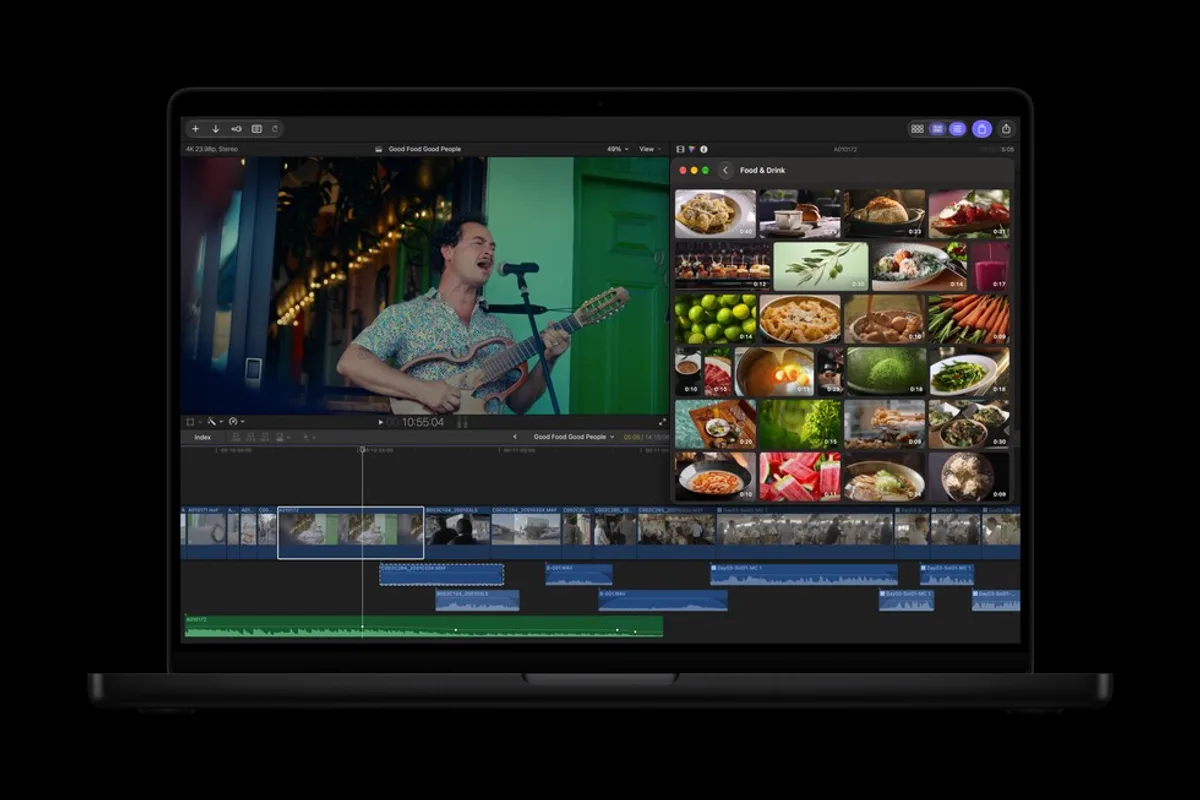
These additions may reduce time spent searching for external resources or transferring assets between applications. Their practical value will depend on the quality of the bundled content and the degree of customization supported.
The editing application also receives expanded keyframe easing controls, more flexible clip placement and transcription in 23 additional languages.
Motion is gaining MotionVFX plug-ins, a Displacement filter and further animation controls. Compressor will support encoding Cinematic mode footage recorded on iPhone 18 Pro and iPhone Duo.
Pricing and compatibility put limits on the update
Creator Studio costs $12.99 per month or $129 per year in the United States. Education pricing for eligible students and educators starts at $2.99 per month or $29.99 annually.
Existing subscribers will receive the November update without an additional charge. Apple also continues offering standalone Mac versions of Final Cut Pro, Logic Pro, Pixelmator Pro, Motion, Compressor and MainStage.
Buying a standalone application does not necessarily include all subscription-specific resources or AI services. The distinction is relevant for professionals comparing a permanent software license against recurring access to the complete suite.
Hardware and operating-system requirements also vary. Final Cut Pro for Mac requires macOS 26.6 or later, while the new Logic Pro assistant requires an Apple Intelligence-capable Mac running macOS 27. MCP support in Pages, Numbers and Keynote is Mac-only and also requires macOS 27.
The contextual assistants are initially limited to U.S. English and beta availability. Apple has not provided an exact November release date for the full update.
The underlying direction is clear from the announced interfaces: Apple is making creative software more interconnected while adding AI-controlled operations inside established applications. Whether those tools deliver reliable productivity gains will depend on their behavior with real projects, user permissions and complex application data once the updates become available.