 By Adri
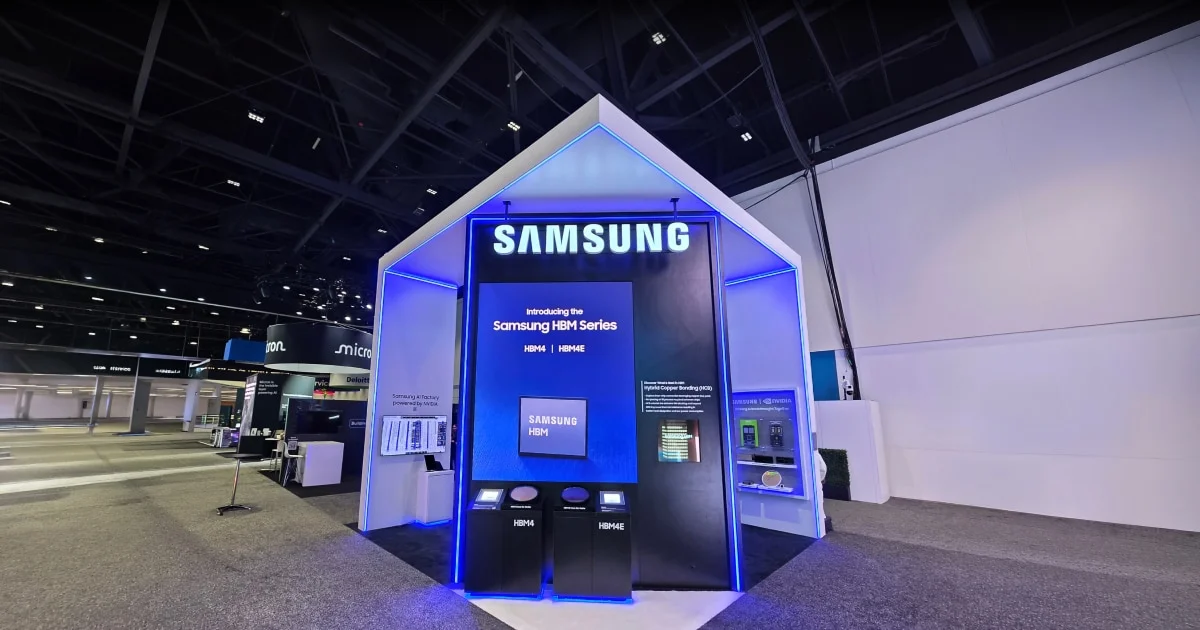
Samsung Electronics has reported an operating profit figure that would have seemed almost impossible for a semiconductor manufacturer only a few years ago.
The company generated KRW 107.4 trillion in operating profit during the third quarter of 2026, surpassing KRW 100 trillion in a single quarter for the first time.
Samsung credits an extraordinary semiconductor market, with rising demand for AI infrastructure and constrained production capacity pushing memory sales and prices sharply higher.
The headline result conceals a striking imbalance. Almost all of Samsung's operating profit came from semiconductors, while several consumer-facing divisions reported losses.
Revenue reaches KRW 195.3 trillion
Samsung reported consolidated quarterly revenue of KRW 195.3 trillion for the period ending September 30, 2026, representing 14% sequential growth.
Operating profit increased 20% from the previous quarter to KRW 107.4 trillion.
That produces an operating margin of approximately 55%, an exceptional level for a company operating across semiconductors, smartphones, displays and consumer electronics.
Operating profit should not be confused with net profit. Samsung's detailed results put quarterly net income at approximately KRW 75.1 trillion.
According to figures published by Samsung and reported by Yonhap, revenue increased approximately 127% year over year, while operating profit rose more than 780%.
Those comparisons reflect both exceptionally strong current demand and a much weaker period one year earlier.
They do not establish that the same growth rates can be sustained indefinitely.
Semiconductors account for nearly all operating income
Samsung's Device Solutions division generated KRW 147.1 trillion in revenue and KRW 106.5 trillion in operating profit.
That represents approximately three-quarters of Samsung's consolidated revenue and close to 99% of operating profit.
The Memory Business set its own quarterly records for both sales and profitability.
Samsung attributes the performance to demand for AI-related products and server infrastructure, along with higher market prices across multiple memory categories.
With manufacturing capacity constrained, the company has been prioritizing high-value products.
This is an important part of the economics of advanced memory. A manufacturer with limited production capacity can improve its revenue mix by allocating more output to products that command higher prices.
However, Samsung has not disclosed enough product-level financial detail to assign a precise share of the division's profit to HBM4 alone.
Device Solutions includes conventional memory products as well as logic semiconductor and foundry operations.
HBM4 shipments expanded significantly
Samsung says it substantially increased HBM4 sales during the third quarter.
High Bandwidth Memory uses vertically stacked memory dies positioned near the processors they serve.
Its purpose is to transfer large quantities of data quickly, a critical requirement for modern AI accelerators.
HBM4 expands the memory interface to 2,048 bits, compared with 1,024 bits in HBM3E.
The wider interface can help increase bandwidth and reduce the time an accelerator spends waiting for data.
For large AI models, memory capacity and data movement can limit effective performance even when the processor itself offers substantial computing power.
Samsung announced the start of HBM4 mass production and commercial shipments in February 2026.
At that time, it specified a transfer speed of 11.7Gbps per pin, with an advertised capability reaching 13Gbps.
The October earnings report is therefore not a new HBM4 product launch. It confirms that shipments of the existing technology have reached a more significant commercial scale.
That does not mean every new AI accelerator has already adopted HBM4. Memory integration requires qualification with the relevant processor and packaging architecture.
Vertical integration is an important part of Samsung's strategy
Manufacturing HBM4 requires advanced DRAM processes, logic components, sophisticated packaging and demanding thermal validation.
Samsung has capabilities across several parts of that production process.
Its memory division manufactures DRAM dies, while foundry operations contribute to advanced logic components, including HBM base dies.
Samsung says increased HBM base-die sales contributed to better Foundry results during the quarter.
The division also benefited from additional advanced-node orders, including 2nm projects for high-performance computing customers.
Combining memory, logic manufacturing and packaging expertise can improve coordination between product design and production requirements.
However, vertical integration does not automatically guarantee superior manufacturing yields or lower total costs.
Advanced HBM products remain technically challenging, and production yields can materially affect the amount of memory available for sale.
AI infrastructure is also increasing demand for DDR5 and SSDs
HBM is not the only form of memory used in AI data centers.
Server CPUs require conventional DRAM, while storage systems must accommodate model files, training datasets, checkpoints and application content.
Samsung plans to expand sales of high-speed server DDR5 and enterprise SSDs alongside its HBM products.
The company also expects growing demand for QLC SSDs as personal AI agents become more widespread.
Agentic applications often combine model inference with code execution, data retrieval and external tools.
Those operations place demands on CPUs, system memory, networking and persistent storage.
HBM, DDR5 and SSDs therefore address different parts of the same computing infrastructure.
Strong HBM4 demand does not necessarily mean conventional memory is becoming less important. In many systems, the different technologies are complementary.
Samsung expects supply constraints to intensify in 2027
Samsung forecasts record AI infrastructure capital expenditure across the industry in 2027.
It also expects AI-driven demand to exceed available memory supply by a wider margin than in 2026.
These are projections, not confirmed shortages for the coming year.
The outlook depends on continued investment by hyperscale cloud providers, new CPU and GPU platforms and the expansion of AI services.
Samsung intends to secure additional multi-year supply agreements to improve visibility into future demand.
Such contracts can support production planning and capital allocation, but they cannot eliminate every market risk.
Customer investment may slow, technologies may change, and data center construction could encounter power or infrastructure constraints.
Current memory profitability is being supported partly by limited supply. A substantial expansion in industry capacity could eventually alter that pricing environment.
Capital expenditure is expected to reach KRW 84.4 trillion
Samsung expects approximately KRW 84.4 trillion in capital expenditure for the full year 2026.
The company spent KRW 29 trillion during the third quarter, including KRW 27.2 trillion in Device Solutions.
Capital expenditure totaled KRW 56.9 trillion over the first nine months of the year.
Samsung expects around KRW 76.8 trillion of its full-year investment to be allocated to the semiconductor division.
The spending supports manufacturing facilities and other infrastructure designed for growing AI and high-performance computing demand.
Additional capacity takes time to establish. New factories require construction, equipment installation, process qualification and manufacturing optimization before they can operate at full scale.
Samsung also expects its Taylor, Texas fabrication facility to begin operations in 2027.
That timeline remains dependent on execution of the industrial project.
The HBM roadmap extends beyond HBM4
Samsung is already developing the next stage of its high-bandwidth memory lineup.
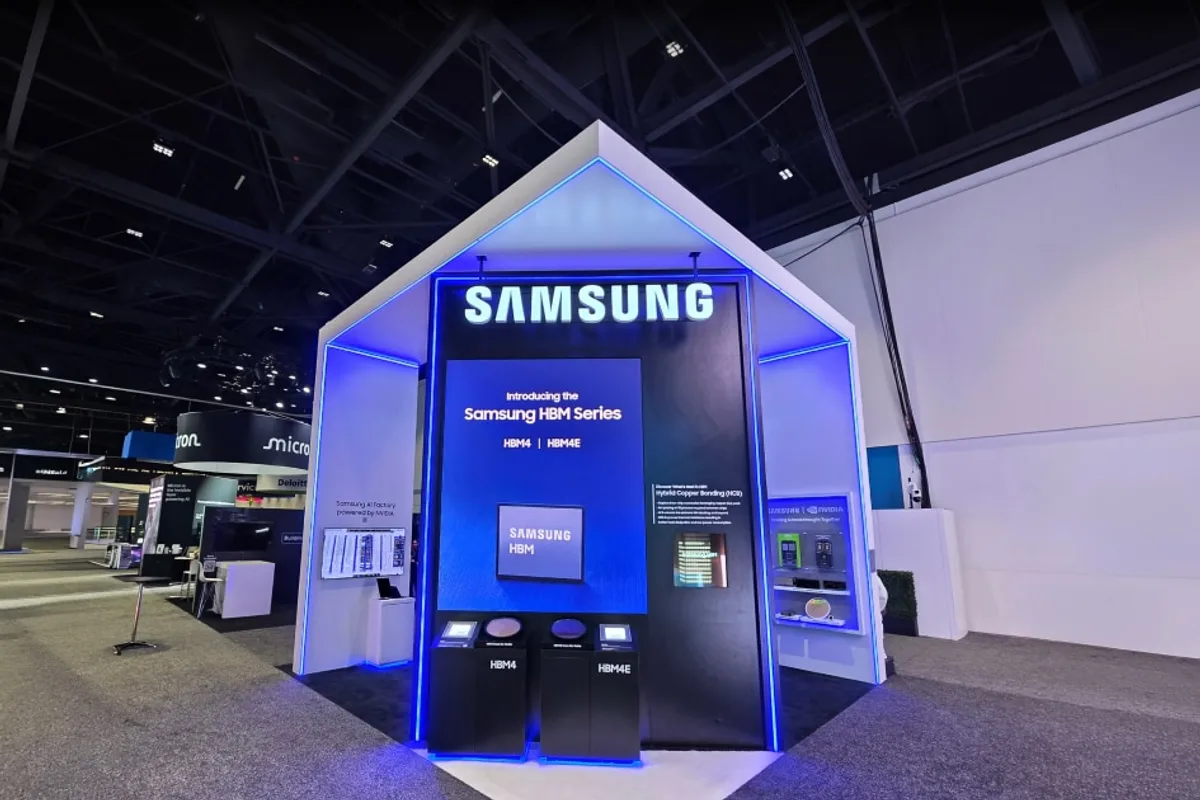
Earlier in 2026, the company presented HBM4E, an enhanced generation intended for future AI accelerators.
Samsung has also announced the shipment of HBM4E samples to selected customers.
Sampling should not be confused with mass commercial availability.
The development of new HBM generations is closely linked to the requirements of GPU designers and hyperscale infrastructure operators.
Important constraints include bandwidth, memory capacity, electrical power and thermal performance.
The objective is to deliver more data to increasingly powerful processors without an unsustainable rise in energy consumption.
New memory generations can also require changes in packaging and the logic components associated with the memory stack.
System performance therefore depends on more than the specifications of a single chip.
Smartphones and consumer electronics tell a different story
Samsung's Device eXperience division reported an operating loss of KRW 0.8 trillion.
Its Mobile eXperience and Networks businesses generated KRW 37.7 trillion in revenue but recorded an operating loss of KRW 0.6 trillion.
Samsung says revenue benefited from premium smartphone launches, including new Galaxy Z Fold models.
However, higher component costs weighed on profitability.
This reveals an important tension within the group. Rising memory prices can generate exceptional earnings for Device Solutions while increasing manufacturing costs for divisions producing finished consumer devices.
Samsung's television and home appliance businesses also reported an operating loss of KRW 0.2 trillion.
The consolidated financial record should therefore not be interpreted as evidence that every Samsung product line is enjoying the same profitability boom.
Extraordinary earnings create greater exposure to the AI cycle
Samsung's third-quarter results demonstrate how deeply the AI infrastructure boom is reshaping the economics of the semiconductor industry.
HBM4 shipments are expanding, demand for server products is supporting prices, and the company's semiconductor division accounts for almost all its operating profit.
That position provides substantial resources for additional investment.
It also increases dependence on spending decisions made by AI accelerator manufacturers and large data center operators.
Competition with SK hynix and other memory suppliers remains important, particularly as manufacturers transition to newer HBM generations.
The financial figures released on October 29 are established results. Samsung's expectations for 2027 remain subject to future demand, supply expansion and customer investment.
The next test will be whether Samsung can increase HBM4 output while sustaining manufacturing yields and maintaining strong profitability as industry supply evolves.