
 By Adri
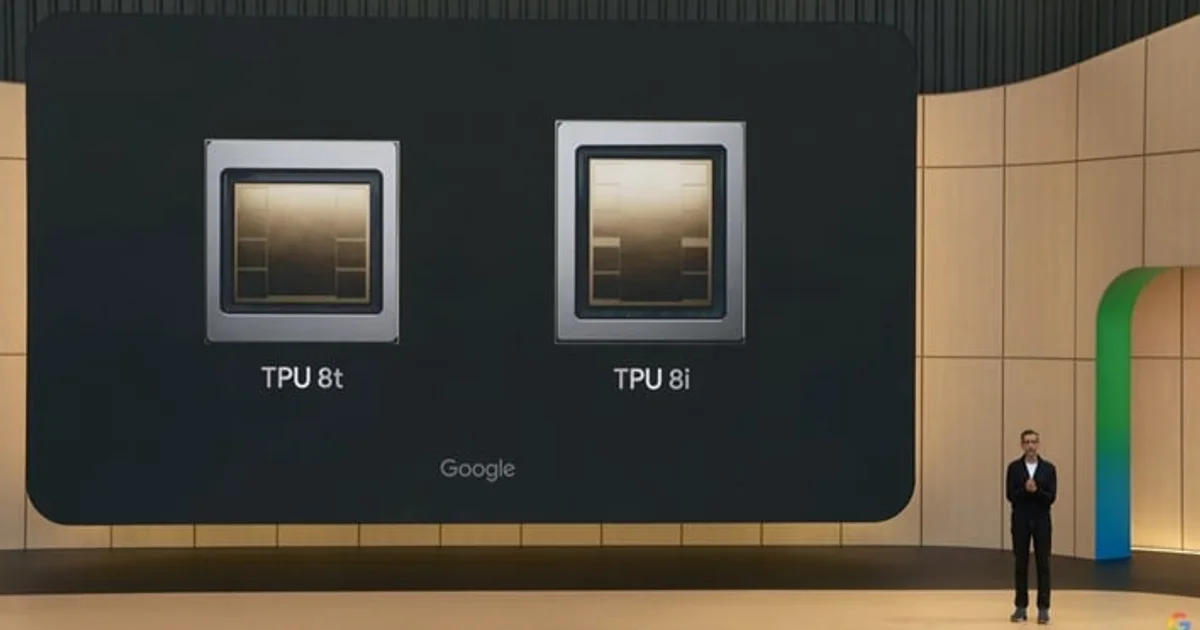
Google's custom AI chips are increasingly important to its cloud business. Originally developed to support internal machine-learning workloads, Tensor Processing Units are now being sold as part of a broader computing infrastructure offering.
Alphabet's third-quarter results make that shift more visible. Google Cloud revenue more than doubled from a year earlier, and the company explicitly identified TPU system sales as a meaningful contributor.
The financial results do not establish how much of the additional revenue came directly from TPU systems. They do, however, demonstrate that Google's strategy of combining custom silicon, infrastructure and software is generating substantial commercial demand.
Google Cloud passes $30 billion in quarterly revenue
Google Cloud generated $30.7 billion in third-quarter revenue, a 103% year-over-year increase.
Growth came from several areas, including enterprise AI infrastructure, AI solutions and core Google Cloud Platform services.
TPU system sales made a meaningful contribution, according to Alphabet's earnings announcement.
That wording is important. The cloud business includes much more than custom processors: compute instances, storage, databases, networking, security services, development platforms and enterprise software all contribute to the division's results.
Alphabet has not disclosed separate TPU revenue, unit shipments or average system pricing.
It would therefore be misleading to attribute the entire 103% cloud growth rate to TPU adoption.
The company's commercial opportunity extends across several models. It can provide cloud compute capacity, sell or deploy TPU systems for customers, and offer software services that run on the same infrastructure.
The results confirm customer interest, but they do not quantify a direct market-share shift away from NVIDIA.
Operating profit rises faster than revenue
Google Cloud reported $11.1 billion in operating income, more than three times the amount generated in the comparable quarter of 2025.
Its operating margin increased to 36.2%, from 23.7% a year earlier.
The improvement suggests that rapid revenue growth is translating into stronger operating profitability.
However, operating margin does not provide a complete picture of the capital required to expand AI infrastructure.
New data centers require large investments in servers, accelerators, networking equipment, storage, cooling systems and power infrastructure before the full computing capacity is available to customers.
Initial capital expenditure and subsequent depreciation appear differently in financial statements. Evaluating the business therefore requires examining operating profits, capital spending and cash flow together.
Google Cloud management also noted that third-party computing capacity discussed during an earlier earnings call came online only near the end of the quarter.
As a result, its expected negative effect on margins was limited during Q3. Investors should not assume that the latest margin can be sustained unchanged as further infrastructure comes online.
TPUs have evolved beyond Google's internal workloads
Tensor Processing Units are specialized processors designed to accelerate the mathematical operations used in artificial intelligence.
Google has been developing TPUs for years, initially using them to support its own products and machine-learning infrastructure.
That internal demand remains important. Google can optimize its AI models alongside the processors, networks and software that execute them.
A vertically integrated approach offers opportunities to improve efficiency across the full system instead of relying solely on the performance of individual chips.
But the latest results highlight an additional business: providing TPU systems and computing capacity to external customers.
Alphabet says demand for those systems is strong across a broad range of clients.
This does not mean Google is replacing NVIDIA throughout its cloud infrastructure. Google Cloud continues to offer NVIDIA GPU instances alongside its custom accelerators.
Customers still need to evaluate software compatibility, memory capacity, networking, workload performance and total operating costs when selecting hardware.
TPU 8t and 8i illustrate Google's specialization strategy
Google introduced its eighth-generation TPU architecture in April 2026, months before the latest earnings announcement.
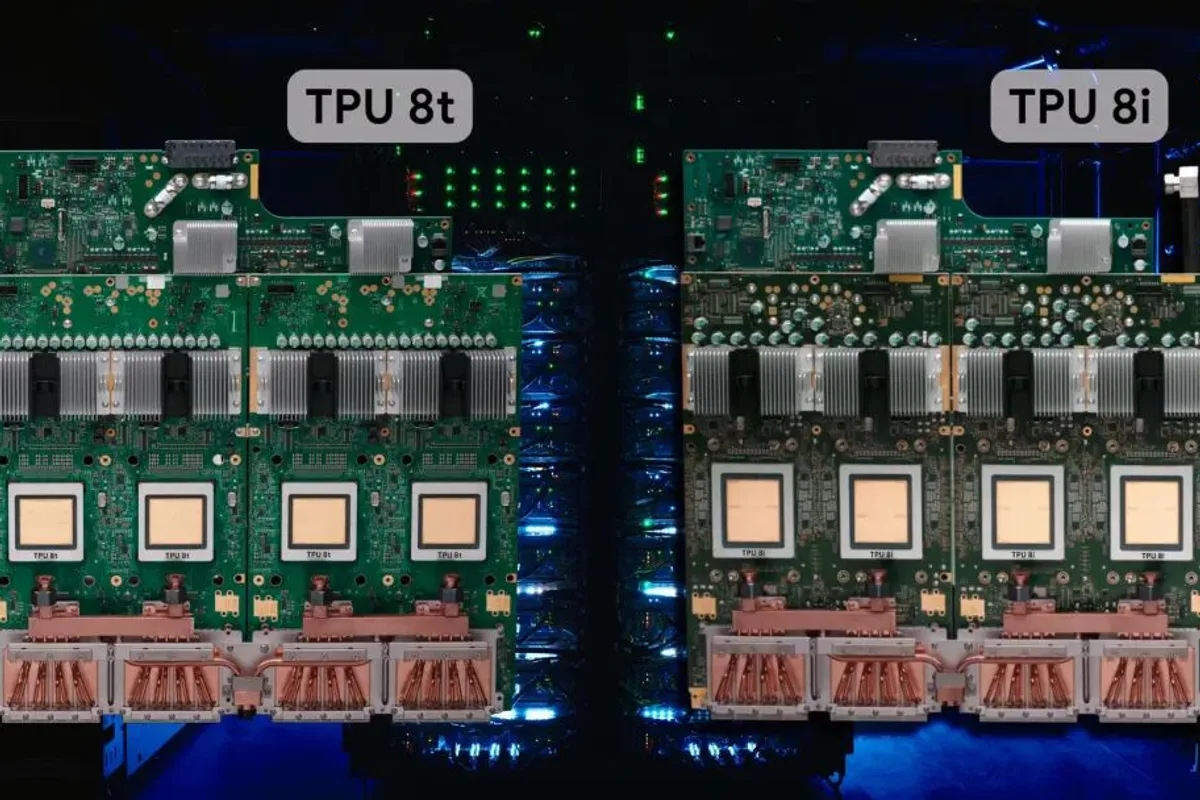
The company separated the generation into two designs: TPU 8t for large-scale training and TPU 8i for inference and reasoning workloads.
The October financial results are not a fresh product launch for either processor.
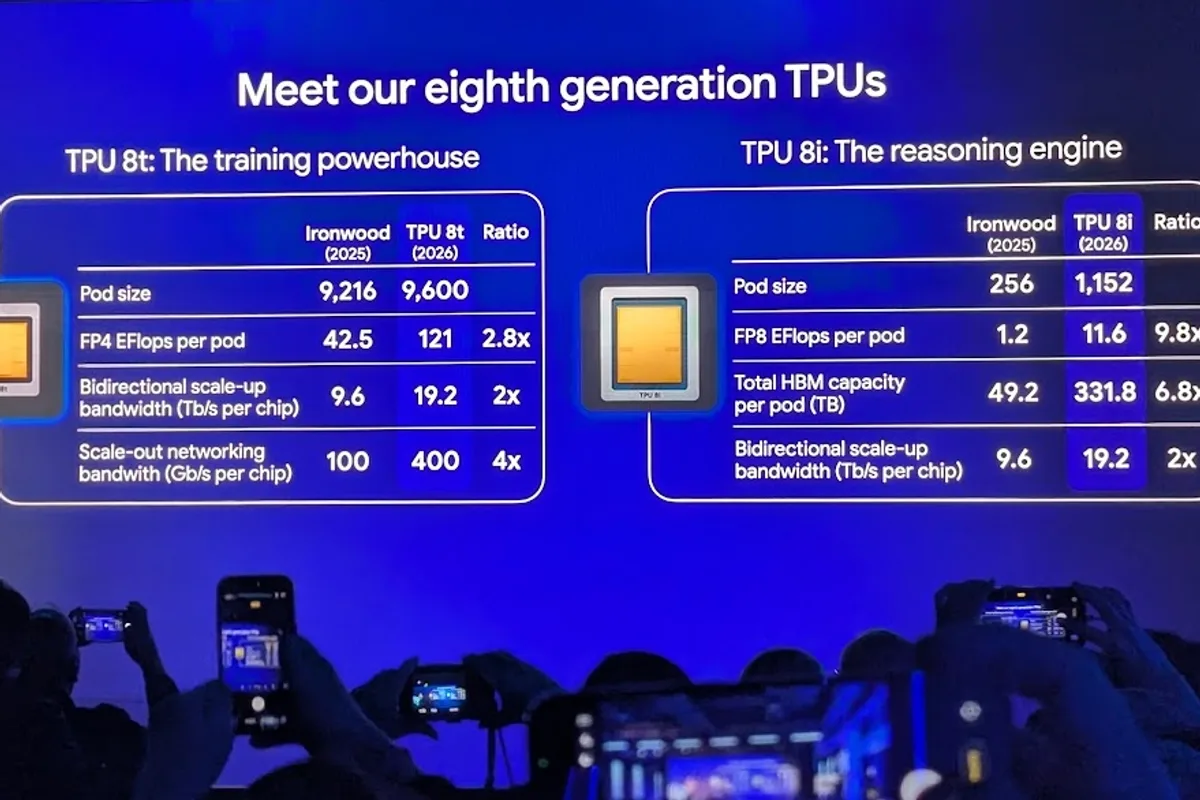
TPU 8t is designed for the large, parallel computations required to train advanced AI models. Google described superpods scaling to 9,600 chips and a shared high-bandwidth memory pool of approximately two petabytes.
Its earlier technical announcement claimed close to three times the compute performance of the preceding generation under the relevant training configurations.
TPU 8i focuses on model serving, particularly applications involving reasoning and sequences of agent interactions.
The architecture includes additional on-chip memory and networking optimized for low-latency communication.
Google previously claimed up to an 80% improvement in inference performance per dollar compared with the Ironwood generation under selected conditions.
These are manufacturer comparisons associated with the April product presentation. They cannot be converted directly into the third quarter's TPU sales revenue or profitability.
The competition with NVIDIA extends into software
Raw computing performance is only part of a platform's value.
Organizations also need software frameworks, developer tools and inference services capable of using the hardware efficiently.
NVIDIA benefits from the breadth of its CUDA ecosystem and associated libraries.
Google relies on technologies including JAX, XLA and Pathways, alongside tools designed specifically for TPU workloads.
In April, the company announced native PyTorch support for TPUs in preview, aiming to make its processors more accessible to developers who do not primarily use Google's preferred frameworks.
Software portability can materially affect the cost of adoption. A platform offering better hardware efficiency may still be expensive to implement if applications require substantial rewriting or optimization.
Conversely, hardware and software designed together can deliver advantages for workloads with predictable requirements.
Alphabet's financial announcement confirms growing TPU demand but does not provide an independent total-cost comparison against equivalent NVIDIA infrastructure.
Capital expenditure reaches $51.36 billion in one quarter
Alphabet spent approximately $51.36 billion on capital expenditures during the third quarter, an increase of 114% from a year earlier.
Spending reached approximately $131.95 billion over the first nine months of 2026.
Those figures reflect the substantial physical resources required to expand AI infrastructure.
Investment extends beyond accelerators to buildings, electrical systems, networking, storage and liquid-cooling installations.
Many of these expenses occur well before the resulting computing capacity produces its full potential revenue.
That creates a long-term investment challenge. Alphabet must build sufficient capacity to serve demand without committing excessive resources to systems that might later become underused.
Chief Financial Officer Anat Ashkenazi indicated that capital expenditure is expected to increase significantly again in 2027.
The statement demonstrates management's expectation of continued demand, but it also highlights the financial exposure associated with expanding capacity.
Power availability, construction schedules, memory supply and the evolution of AI workloads may all affect how quickly new investments become productive.
Google's model APIs process nearly 32 billion tokens per minute
Sundar Pichai said Google's first-party model APIs are processing nearly 32 billion tokens per minute.
That represents a 40% increase from the previous quarter and more than four times the level observed one year earlier.
The figure indicates a rapid increase in AI usage, but it is not a direct revenue measure.
Different models have different operating costs, and token volumes alone do not disclose how customers are billed or which workloads generate the highest margins.
Google also reported that the Gemini application has reached one billion users.
The company did not state that all those users pay for subscriptions or that they all use the most resource-intensive models.
The number therefore should not be multiplied by a subscription price to estimate Gemini revenue.
The operational challenge is to reduce the cost of serving individual requests while supporting continued growth in both volume and complexity.
That helps explain the emphasis on efficient inference hardware and specialized processors.
Alphabet reports $127.6 billion in total revenue
Alphabet's consolidated third-quarter revenue reached $127.6 billion, up 25% year over year.
Google Services generated $96.3 billion, an increase of 11%.
Google Search and related revenue grew 12%, while YouTube continued to benefit from advertising and subscription activity.
Consolidated operating income reached approximately $40.58 billion, corresponding to a 31.8% operating margin.
Net income attributable to common shareholders was approximately $26.2 billion, below the roughly $35 billion reported a year earlier.
The difference between growing operating income and declining net income reflects, in part, non-operating financial effects, including losses associated with equity investments.
It would therefore be incorrect to interpret the drop in net income as evidence that Alphabet's operating businesses are collectively becoming unprofitable.
The company's share price also reacted negatively to the results and the scale of investment.
Short-term market reactions, however, do not establish the future return on infrastructure capital.
Google's infrastructure strategy faces its next economic test
Google Cloud's growth demonstrates that custom AI processors can become a meaningful commercial offering for a large cloud provider.
Alphabet controls multiple layers of its infrastructure, from TPU design and network architecture to software frameworks and enterprise services.
That creates opportunities for system-wide optimization, but does not remove competition from NVIDIA or the challenges of acquiring advanced memory, power and manufacturing capacity.
Google continues to support different computing platforms because customer workloads vary in their hardware and software requirements.
The quarterly results also leave important questions unanswered. Alphabet has not disclosed individual TPU shipments, separate TPU revenue or product-level margins.
For customers, the decisive figures will be real cost per inference or training job, application reliability and availability of the required computing capacity.
For Alphabet, the central challenge is whether cloud revenue and profit can continue growing rapidly enough to justify increasingly large infrastructure investments.
The third-quarter results establish the commercial momentum of Google Cloud and the importance of its AI systems. They do not yet determine the long-term economics of the industry's escalating competition to provide computing power.