
 By Adri
For years, Apple has maintained a relatively clear division between its computers and tablets.
Macs are primarily controlled through keyboards, mice and trackpads. iPads are designed around direct interaction with the screen.
That distinction could change this week.
According to Bloomberg's Mark Gurman, Apple intends to introduce new MacBook Pro models with OLED touchscreen displays on Wednesday, October 28.
The report appeared in Gurman's Power On newsletter on Sunday, October 25, and was subsequently covered by MacRumors.
It adds new details about the potential relationship between touch input and the macOS interface.
Apple has confirmed the upcoming event, but has not officially announced the laptops described in the report.
That distinction matters because the rumored changes would affect not only the MacBook Pro's hardware but also the way professional Mac users interact with their computers.
Apple has confirmed its October 28 Pro and Tell experience
Apple began publicly promoting the event on October 19.
Greg Joswiak, the company's senior vice president of Worldwide Marketing, shared an invitation using the phrase Pro and Tell.
Members of the media have been invited to an experience in Los Angeles on Wednesday, October 28, at 10 a.m. Pacific Time.
The presentation may not follow Apple's traditional livestreamed keynote format.
Instead, the company could introduce new products through press releases and provide hands-on demonstrations for invited journalists.
The format does not change the status of the rumors.
Apple has not confirmed the specifications of any OLED touchscreen MacBook Pro.
The timing of the event is official, while the expected product lineup remains based on reporting.
OLED MacBook Pro models are expected in two sizes
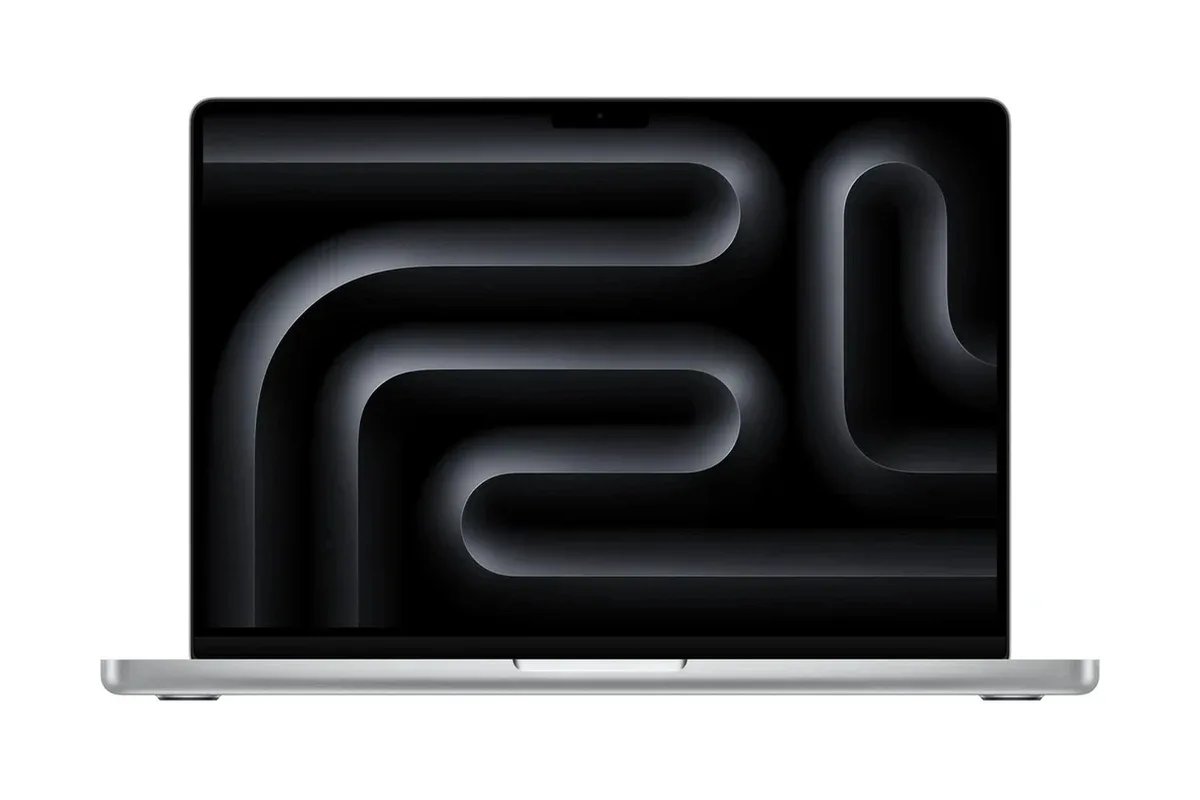
Bloomberg expects Apple to retain the familiar 14-inch and 16-inch MacBook Pro sizes.
The major change would be the replacement of the existing mini-LED LCD panel with an OLED display capable of detecting touch input.
The computers are also expected to be lighter while retaining a broadly familiar design.
That would represent a meaningful revision rather than a complete departure from the existing MacBook Pro form factor.
Another reported change concerns the top of the display.
Apple may replace the current notch with a Dynamic Island, borrowing a design approach already familiar from the iPhone.
This does not automatically mean every iPhone Dynamic Island function will appear on the Mac.
Its precise integration with notifications, system controls and background activities has not been demonstrated.
Images currently circulating in technology publications include concept illustrations and mockups.
They should not be confused with confirmed photographs of a final production device.
OLED could significantly change image reproduction
Current MacBook Pro models use mini-LED backlit LCD displays.
The technology relies on numerous backlighting zones to control illumination, providing high brightness and sophisticated contrast performance.
OLED follows a fundamentally different approach.
Each pixel generates its own light and can be switched off independently.
When bright objects appear against a black background, OLED avoids the backlighting halos that can occur on LCD panels.
This can be particularly useful for video, photography and interfaces containing large dark areas.
OLED pixels can also provide very fast response times.
However, those general advantages do not establish superiority in every category.
Current mini-LED MacBook Pro displays can sustain substantial brightness levels.
The rumored OLED panels will need independent testing, particularly when displaying large bright surfaces.
Color accuracy, HDR performance and visibility in strongly lit environments will also matter.
No independent measurements of the unannounced laptops are available.
Touch input would challenge Apple's traditional Mac philosophy
The second major change would be the touchscreen.
Touch-enabled displays are not new in the broader laptop industry.
Many Windows computer manufacturers have offered them for years.
Apple, however, has generally reserved direct screen interaction for the iPad and its other touch-oriented products.
The MacBook remains designed around a keyboard and trackpad.
That arrangement has ergonomic advantages, particularly for extended typing and precision work.
Adding a touchscreen does not necessarily mean Apple intends to abandon the existing approach.
Bloomberg instead describes touch as an additional method of input, available when it is more convenient than moving a pointer.
The keyboard and trackpad would remain central to the experience.
Users could alternate between interaction methods rather than adopt an entirely different workflow.
macOS could adapt its controls to the way users interact
One of the most interesting elements of Bloomberg's report concerns the operating system.
Apple is reportedly developing a dynamic interface that responds to previous interactions.
When someone uses a trackpad, controls could retain a presentation optimized for precise pointer movement.
After direct touch interaction, certain controls could appear in forms more suitable for fingers.
Gurman describes menus potentially appearing around the point touched.
The Dock and Menu Bar are also reportedly being adapted.
This approach addresses a persistent challenge for touchscreen computers.
An interface designed for a mouse can include targets too small to operate comfortably with fingers.
Permanently enlarging every control can reduce the amount of usable workspace.
A context-sensitive interface could provide a compromise.
It might retain dense professional controls for pointer use while offering larger interactive elements when necessary.
However, this remains a reported feature rather than a demonstrated commercial implementation.
Its effectiveness will depend on how consistently Apple applies the behavior across applications.
The trackpad would remain essential
One concern about hybrid interfaces is whether they attempt to replace workflows that already work well.
MacBook Pro owners frequently use their computers for writing, software development, video editing, spreadsheets and complex window management.
In those situations, keyboards and trackpads remain highly effective.
Touch could prove useful for specific actions rather than continuous operation.
For example, directly selecting an on-screen element or opening a nearby contextual control might sometimes require fewer movements.
These are potential usage scenarios, not confirmed Apple demonstrations.
The reporting suggests that Apple wants to preserve the Mac's familiar desktop workflow.
That distinction is important.
A touchscreen is valuable when it simplifies a task. It is less valuable when reaching toward the display is slower or less comfortable than using existing controls.
The hinge may need to be stronger
Regularly touching a laptop display applies mechanical force that a trackpad does not.
If a screen is insufficiently stable, each tap can make it move.
Earlier reports have suggested that Apple could reinforce the MacBook Pro's hinge to accommodate touch interaction.
The goal would be to reduce screen movement during direct input.
This may sound minor compared with OLED technology and new processors.
In practice, it could have a substantial effect on usability.
A comfortable touchscreen requires both accurate sensing and a display assembly stable enough to respond to repeated gestures.
Apple has not confirmed any particular mechanical changes.
The final hinge design, weight distribution and overall dimensions will need to be verified when the products are officially introduced.
M5 Pro and M5 Max chips are expected, not new M6 Pro models
The processor rumors require careful distinction.
According to Bloomberg, the OLED touchscreen MacBook Pro models will use M5 Pro and M5 Max processors.
Those chips are already available in MacBook Pro models introduced in March 2026.
The main changes would therefore concern the display and physical design, rather than a completely new high-end processor family.
Apple may also introduce other Macs using the M6 processor during the same presentation.
Reports mention an entry-level 14-inch MacBook Pro and a new iMac.
Those devices should not be confused with the rumored premium OLED models.
An M6 chip in a standard MacBook Pro does not automatically imply an M6 Pro chip in the more expensive touchscreen version.
Performance expectations will therefore depend on the final configurations.
OLED MacBook Pro prices could rise significantly
Moving to OLED could also affect pricing.
MacRumors notes that current mini-LED MacBook Pro models with M5 Pro chips start at $2,499 for the 14-inch model and $2,999 for the 16-inch version in the United States.
Bloomberg's reporting suggests that the entry price for the new OLED models could increase by as much as $500.
That is not an official price.
Apple has not confirmed US or European pricing for the rumored computers.
Any exact euro figure would therefore be premature.
If the price increase materializes, Apple may keep current mini-LED MacBook Pro models available for a period.
Bloomberg indeed suggests that the older display technology could remain in the lineup temporarily before being phased out.
Such a strategy would allow Apple to introduce higher-priced display technology without immediately replacing every professional laptop configuration.
Mini-LED MacBook Pros could remain attractive
A newer OLED version would not automatically make the existing MacBook Pro obsolete.
Current mini-LED models already offer capable professional displays.
They also run the same general software environment and, according to the current rumors, may use processors from the same M5 Pro or M5 Max families.
Potential OLED improvements would mainly involve display characteristics and direct touch interaction.
Processing performance may remain relatively close depending on memory and chip configuration.
A proper comparison will also require examining storage, energy consumption and thermal behavior.
Connectivity and professional features should not be assumed identical until Apple publishes final specifications.
For some buyers, the existing models may continue offering sufficient performance without the rumored additional cost.
OLED does not guarantee longer battery life
OLED panels can switch individual pixels off when displaying black.
This can reduce energy use with dark interfaces and certain content.
However, display consumption depends heavily on what appears on screen.
A large bright document may create different power demands.
Overall laptop battery life also depends on processor activity, cooling, memory, storage and background tasks.
An OLED panel does not therefore guarantee better endurance in every workload.
Touch functionality also adds sensing components and supporting circuitry.
The actual power consumption of the rumored machines will need measurement after release.
For people who regularly work away from an outlet, demonstrated battery life will remain more important than display branding.
Durability and repair costs will matter too
OLED brings additional durability questions.
The technology can be susceptible to image retention or burn-in under certain long-term usage patterns.
Modern OLED displays incorporate multiple protective mechanisms designed to reduce those risks.
It would therefore be inaccurate to assume that the rumored MacBook Pros will necessarily suffer from burn-in.
Nevertheless, professional laptops may display static interface elements for many hours.
Long-term display behavior deserves evaluation.
Repair pricing is another unknown.
An OLED touchscreen integrates several functions into a display assembly that may be costly to manufacture or replace.
Apple has not announced replacement-part prices for these unconfirmed computers.
Parts availability, repair procedures and warranty conditions will need to be assessed after any official launch.
An OLED iPad mini and other Macs could join the announcement
The October 28 presentation may not focus exclusively on the MacBook Pro.
According to Bloomberg, Apple could also introduce an OLED iPad mini.
Changes to its camera placement and speaker system have been reported.
An M6 iMac and an entry-level 14-inch MacBook Pro with an M6 processor are also among the expected products.
None of those devices has been formally confirmed for the presentation.
The only official announcement so far concerns the Pro and Tell event itself.
The actual lineup and timing could still differ from current expectations.
When could the laptops become available?
Wednesday, October 28, is the expected announcement date.
It is not yet an official retail launch date.
Bloomberg previously suggested Friday, November 6, as a possible availability date.
Apple has not confirmed that timing.
Preorder arrangements, launch countries and delivery schedules remain unknown.
For people currently considering a high-end MacBook Pro purchase, the proximity of the event provides a practical reason to wait for official specifications.
It should also clarify the real price differences rather than leaving buyers dependent on estimates.
A larger shift than simply replacing the display
If Bloomberg's reporting proves accurate, the OLED touchscreen MacBook Pro could represent one of the most meaningful changes to Apple's professional laptops in years.
OLED could improve selected aspects of image quality.
Dynamic Island could change how system information is presented at the top of the screen.
But touch-aware macOS interaction would have the greatest implications for everyday Mac use.
Apple reportedly intends to retain the keyboard and trackpad rather than replace them.
The goal would be to combine input methods without sacrificing established professional workflows.
Whether that approach delivers a lasting ergonomic advantage remains uncertain.
A touchscreen does not automatically improve a laptop, just as OLED does not guarantee better battery life under every condition.
Interface design, hinge stability, display performance and pricing will determine the practical value of the changes.
October 28 could provide the first official answers if the expected products are announced. Until then, Apple's event is confirmed, but the OLED touchscreen MacBook Pro remains a product anticipated by Bloomberg rather than an officially unveiled computer.