
 By Adri
A semiconductor fabrication facility depends on far more than lithography tools and advanced process technology.
Materials must move between production areas, equipment must receive supplies and manufacturing operations need to continue in tightly controlled environments.
Automation plays a central role in those processes.
Intel uses specialized robotic transport vehicles across parts of its American manufacturing operations.
Those machines recently became the subject of a regulatory question.
On October 22, the Federal Communications Commission granted Intel a one-year waiver covering certain foreign-made robotic devices.
The decision allows specified maintenance-related hardware, software and firmware changes needed to keep the equipment operating.
Ars Technica examined the decision on October 23, highlighting the uncertainty that prompted Intel to request the exemption.
The case illustrates a broader problem for American industrial policy.
Domestic semiconductor manufacturing depends on a global network of specialized equipment suppliers, even when the final chips are fabricated in US facilities.
These are transport vehicles, not humanoid robots
The phrase foreign-made robots might suggest humanoid machines walking through Intel's factories.
That is not what the company's regulatory request describes.
The equipment consists of Automated Guided Vehicles, commonly called AGVs.
These machines transport materials along predefined routes, which may involve tracks or programmed paths.
Their primary function is industrial logistics rather than general-purpose manipulation or human-like movement.
They can operate with varying degrees of automation and may require operator oversight.
In semiconductor manufacturing, reliable material handling is part of the production process itself.
The vehicles help organize the flow of materials and equipment between different areas of a facility.
They do not necessarily have the advanced reasoning and perception capabilities associated with contemporary humanoid robotics demonstrations.
Their importance comes from their precise role within an interconnected production environment.
Replacing an established transport system can affect many processes that depend on it.
Why maintenance became a regulatory concern
The dispute originates from restrictions affecting certain foreign-produced advanced robotic devices.
On July 28, 2026, the FCC added categories of foreign-made robotics equipment to its Covered List.
The list is part of the agency's system for regulating equipment associated with national security concerns.
The changes affect authorization procedures for certain devices, including new models and some modifications to equipment that was previously approved.
However, the restrictions should not be interpreted as a blanket prohibition on every foreign robot already operating in the United States.
Many previously authorized devices can continue to be used.
The challenge involves which changes are permitted when existing equipment needs maintenance or adaptation.
For industrial machinery, those changes can be essential.
A system operating every day must remain repairable and serviceable throughout its working life.
Intel was concerned that the revised regulations might complicate those operations for some of its transport vehicles.
The company also said it was unclear whether the identified equipment fell within the exact scope of the restrictions.
Rather than risk a regulatory conflict, Intel requested specific relief.
Intel sought the waiver as a precaution
Intel filed its request on October 16, 2026.
It wanted permission to maintain and modify selected Automated Guided Vehicles through hardware, software and firmware changes.
Those categories represent different aspects of equipment maintenance.
Software changes can update operating logic, while firmware often controls lower-level device functions.
Hardware modifications may involve physical components.
All three can be important to the long-term operation of industrial machinery.
Existing FCC procedures already provide certain relief for software and firmware updates.
Intel nevertheless wanted greater regulatory clarity for the equipment identified in its petition.
The FCC granted the one-year waiver less than a week after the application.
The authorization applies to specified machines listed in a confidential appendix.
Their exact models have not been publicly disclosed.
The exemption has strict limits
Intel did not receive unrestricted permission to import or modify foreign-made robots.
The waiver covers a defined set of existing Automated Guided Vehicles.
Those machines must remain under Intel's control within its facilities.
Permitted modifications must support continued operation and maintenance.
They cannot be used to transform existing devices into newly marketed products.
The FCC also prohibits changes that improve or alter the equipment's radio-frequency performance.
Another condition prevents Intel from replacing US-made components with foreign-made ones under the waiver.
These restrictions preserve the narrow scope of the decision.
The exemption does not change the general rules applicable to other covered devices.
Nor does it guarantee that the same permission will remain available after the one-year period expires.
Any subsequent arrangement would depend on the rules and decisions in effect at that time.
Replacing the vehicles could take years
Intel describes the identified vehicles as essential to its American semiconductor manufacturing operations.
The company says it has used this type of equipment for more than two decades.
That long operational history matters.
The transport systems are integrated into industrial processes that have been developed and refined over time.
Replacing them would require more than purchasing another machine with similar dimensions.
Intel would need to identify suitable suppliers, evaluate compatibility, qualify replacement equipment and integrate the new systems into existing facilities.
Semiconductor manufacturing imposes additional constraints.
Equipment must operate in environments where cleanliness, precision and repeatability are critical.
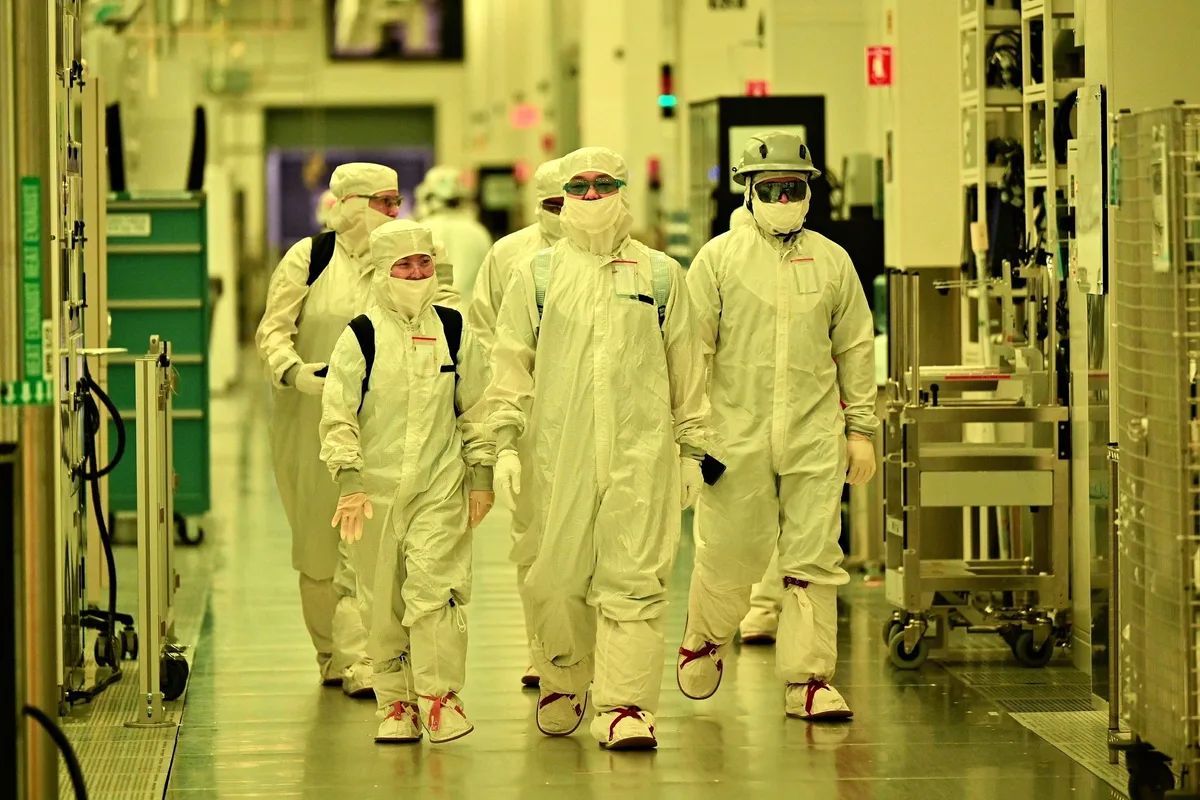
An incompatible transport system could introduce logistical challenges or require substantial changes to existing processes.
Intel says it currently lacks proven American-made alternatives satisfying its operational requirements for the identified devices.
That is the company's position, not proof that no American supplier manufactures any type of automated vehicle.
The distinction is narrower and more relevant.
Intel says it has no immediately suitable domestic replacement for these specific industrial applications.
Replacing the equipment could require several years and might disrupt production.
Japanese suppliers illustrate the international supply chain
Several important manufacturers of automated material-handling equipment are based outside the United States.
Japanese companies including Daifuku and Murata Machinery are well known in industrial automation.
Bloomberg mentioned those suppliers in its reporting on Intel's regulatory request.
However, the specific models covered by the waiver are identified in a confidential appendix.
The available information does not establish that every affected Intel vehicle was manufactured by those companies.
That distinction is important when interpreting the story.
The industry's reliance on international suppliers is documented.
The complete supplier list for Intel's affected AGVs is not publicly available.
The broader reality remains that an American semiconductor factory may depend on Japanese, European or other foreign-made equipment.
The nationality of the manufacturing site does not automatically determine the origin of every machine inside it.
Domestic chip production still requires global equipment suppliers
The United States has spent years attempting to strengthen domestic semiconductor manufacturing.
The strategy aims to increase industrial capacity on American territory and reduce selected dependencies on foreign production.
Intel plays a major role in those efforts.
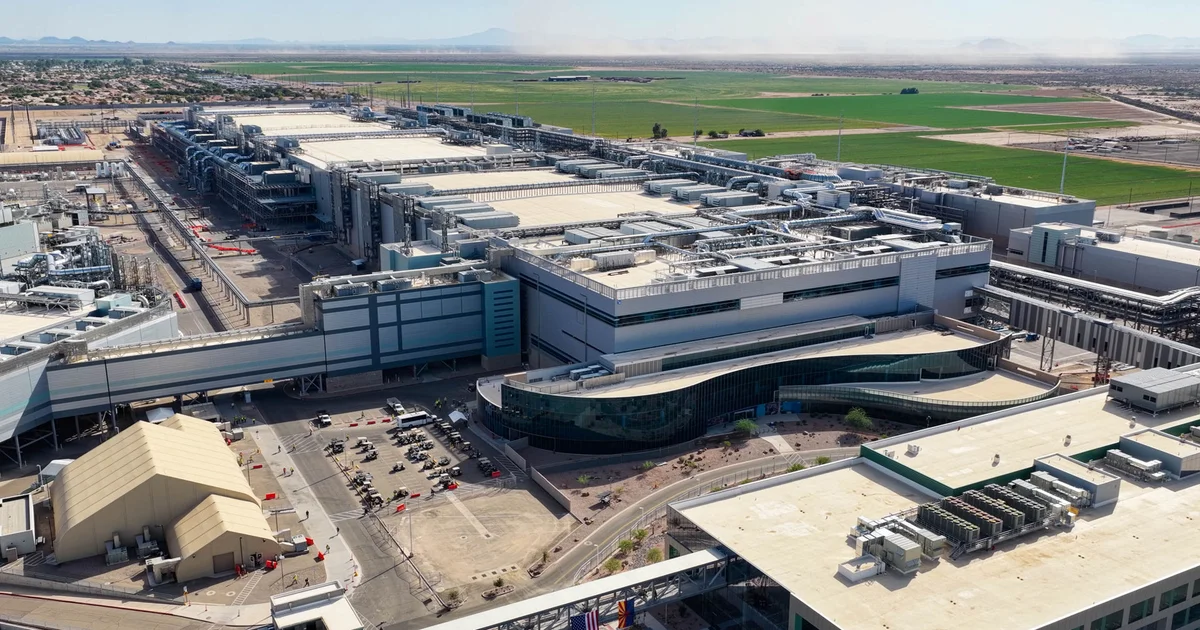
The company operates and develops multiple American manufacturing sites, particularly in Arizona.
Fab 52 in Chandler is one prominent example.
The facility manufactures advanced processors using Intel's 18A process technology.
Yet constructing a domestic fab does not automatically create an entirely domestic equipment industry.
Modern semiconductor production requires specialized lithography, measurement, deposition, etching, cleaning and material-handling systems.
Developing national manufacturing capacity therefore involves more than establishing the final production location.
The Intel waiver illustrates a recurring industrial policy problem.
A restriction intended to reduce foreign dependence can conflict with the immediate needs of factories already operating with imported machinery.
If companies cannot maintain existing equipment before suitable replacements become available, the policy may threaten the production capacity it is intended to protect.
The FCC acted to avoid disruption, not to restart a stopped factory
The FCC says its decision aims to prevent potential interruptions to American semiconductor manufacturing services.
That does not mean Intel's factories had already stopped operating.
The sources reviewed do not establish an actual production shutdown directly caused by these robotics restrictions.
The exemption is preventative.
Intel identified a regulatory uncertainty that could interfere with future maintenance.
It sought clarification and specific permission before that uncertainty became an operational problem.
The FCC concluded that narrowly limited relief was justified.
The immediate result is therefore reduced regulatory risk rather than the restoration of previously halted manufacturing.
No confirmed monetary estimate of the losses avoided by the waiver has been published.
It would be speculative to assign a precise financial benefit to the decision.
National security rules meet maintenance requirements
The FCC's restrictions on certain foreign-produced robots are framed around national security concerns.
Modern industrial automation systems can include embedded software, electronic controllers and communications equipment.
Their deployment inside sensitive facilities can therefore raise questions about equipment security and system control.
However, those regulatory concerns do not establish that Intel's specific AGVs were compromised or malicious.
The available records provide no evidence that the identified vehicles transmitted confidential data to a foreign actor.
The dispute concerns authorization and maintenance rules.
The FCC's response attempts to balance continued regulatory oversight with the operational requirements of domestic semiconductor production.
The limited duration and strict conditions of the waiver reflect that compromise.
Other manufacturers may face similar questions
Intel is unlikely to be the only industrial company using specialized foreign-made automated vehicles.
Advanced manufacturing facilities, warehouses and automated production systems commonly rely on international equipment suppliers.
Other businesses could encounter comparable regulatory uncertainty if their machines fall within the covered categories.
The October 22 decision provides an example of one possible solution.
A narrowly tailored waiver can allow continued maintenance of specific equipment while broader restrictions remain in force.
However, the Intel decision does not automatically exempt other manufacturers.
Each company would need to evaluate its own equipment and applicable regulatory obligations.
The ruling also should not be described as a general reversal of US policy.
The underlying restrictions remain in place.
One year of certainty is not a permanent industrial solution
The waiver gives Intel one year of regulatory clarity for maintaining the identified vehicles.
That can reduce uncertainty around selected service operations.
It does not automatically solve the longer-term question of domestic alternatives.
Developing replacement industrial transport systems requires investment, technical qualification and gradual integration.
No verified schedule establishes that American suppliers will provide complete substitutes for all affected vehicles before the waiver expires.
Intel will therefore need to monitor future regulatory developments while continuing to support its manufacturing systems.
For the FCC, the case may also illustrate the practical challenges of applying broad restrictions to very different categories of robotics equipment.
A single regulatory framework can encompass new mobile robots and mature factory systems performing highly specialized tasks.
Those differences help explain why the equipment definitions and modification rules created uncertainty.
An American fab remains part of a global industrial network
The Intel waiver does not, by itself, invalidate American industrial policy.
It does demonstrate that reshoring semiconductor manufacturing involves a complicated network of dependencies.
Producing chips in the United States requires more than placing a fabrication facility on American soil.
Factories also need access to specialized equipment and the ability to maintain it throughout its operational life.
Intel's request highlights the distance between a policy goal of domestic equipment independence and the reality of existing supplier relationships.
The FCC granted narrowly defined relief to prevent that tension from disrupting semiconductor production.
The central story is not simply that Intel uses foreign-made robots.
Global equipment supply chains have been part of semiconductor manufacturing for decades.
What makes the case significant is that changes to equipment authorization rules created uncertainty about maintaining machinery already embedded in American factories.
The waiver addresses Intel's immediate regulatory problem.
The broader lesson is that industrial sovereignty depends not only on where chips are fabricated, but also on whether the equipment required to manufacture them can be sourced, serviced and supported reliably.