
 By Adri

Advanced AI depends on far more than software and specialized processors.
Behind every major computing cluster are server racks, networking systems, power distribution equipment, cooling technology and a manufacturing supply chain capable of producing those components at scale.
Foxconn wants to play a larger role in that infrastructure.
At its annual technology event in Taipei on October 30, chairman Young Liu confirmed that the company was preparing another collaboration with OpenAI.
He had met Sam Altman earlier the same day, but said details would be announced only when they were finalized.
That qualification matters. The new collaboration is under discussion, not a fully disclosed contract with confirmed financial or production commitments.
The latest announcement confirms discussions, not a completed deal
Young Liu discussed the prospective collaboration with reporters during Hon Hai Tech Day.
According to Reuters, he indicated that a new arrangement with OpenAI was in development following his meeting with the company's chief executive.
He did not identify specific products, manufacturing locations, purchase quantities or contractual values.
No completion date or formal announcement timetable was provided.
Consequently, the statement should not be interpreted as confirmation of a new factory, a multibillion-dollar purchase order or a signed manufacturing agreement.
The discussions are nevertheless significant because Foxconn and OpenAI have an existing industrial relationship.
That relationship provides context for what the next phase might involve, even though the actual terms remain unknown.
The first partnership was announced in November 2025
OpenAI announced its initial collaboration with Foxconn on November 20, 2025.
Foxconn issued its corresponding announcement in Taipei on November 21.
The arrangement focused on designing and preparing to manufacture advanced AI infrastructure hardware in the United States.
Three areas were identified.
The first involved jointly designing and engineering multiple generations of AI data center racks.
The second concerned strengthening and simplifying U.S. supply chains, including increased sourcing and manufacturing activity within the country.
The third focused on manufacturing critical components such as cabling, networking hardware, cooling equipment and power systems.
OpenAI was expected to provide information about the hardware requirements of current and future AI workloads.
Foxconn would contribute manufacturing expertise and engineering capabilities.
The agreement did not include binding purchase commitments or financial obligations at the time of announcement.
OpenAI received early access to evaluate the systems and an option to purchase them.
That structure should not be confused with a guaranteed revenue backlog for Foxconn.
AI server racks are becoming strategic hardware
An AI data center is not simply a collection of ordinary servers fitted with powerful graphics cards.
Large accelerator clusters require high-speed communication, substantial electrical capacity and cooling systems capable of handling considerable heat.
A server rack brings together computing equipment, networking components and supporting infrastructure.
When many accelerators need to operate together, system-level design becomes critical.
Power delivery must remain reliable, communication delays must be controlled and cooling must keep equipment within suitable operating limits.
Manufacturing expertise can therefore affect how quickly a new AI computing platform becomes available.
A company capable of assembling and testing complete systems can occupy an important position even without designing the underlying AI models or every semiconductor in the rack.
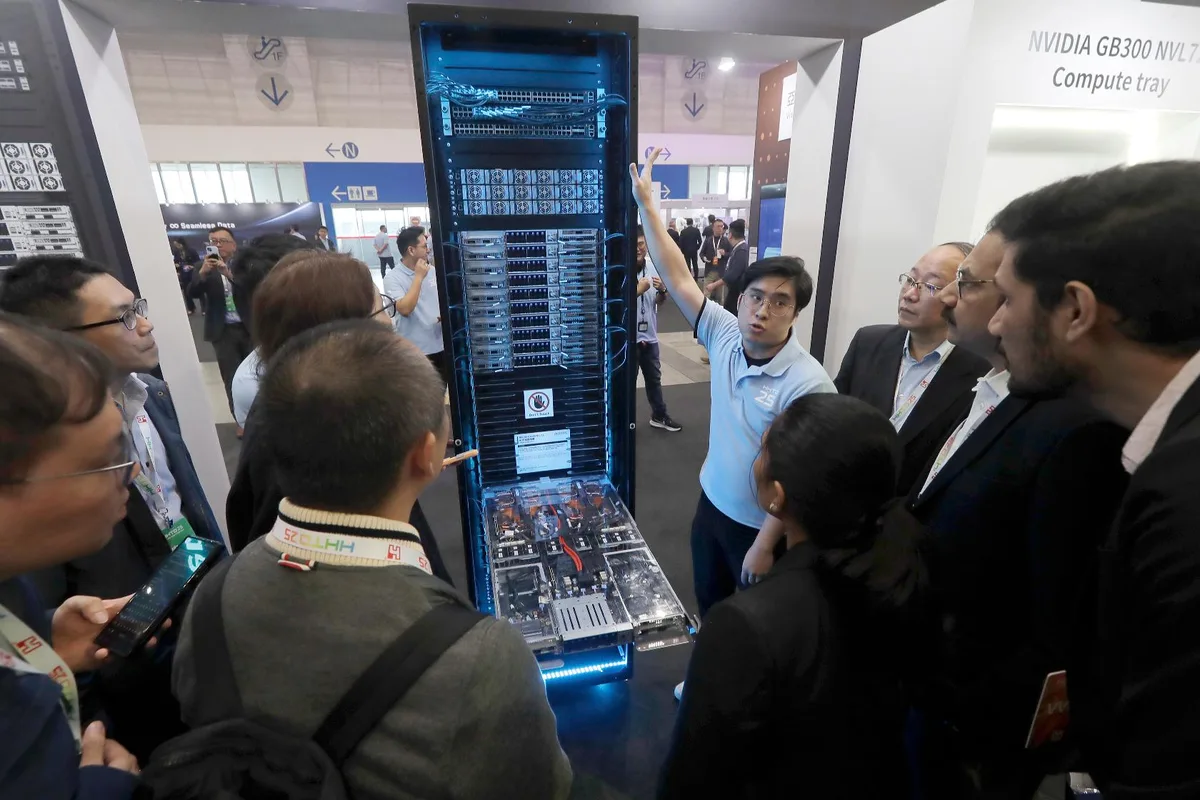
Foxconn already has extensive NVIDIA server experience
Foxconn is not a newcomer to AI infrastructure.
Reuters describes the company as NVIDIA's largest AI server manufacturer.
That role gives Foxconn practical experience with the assembly and integration of high-density computing systems.
Modern AI server platforms combine accelerators, networking hardware, sophisticated cooling and power distribution.
Producing them at scale requires coordination across numerous suppliers and manufacturing processes.
Those capabilities could be relevant to OpenAI as it expands its computing infrastructure.
However, Foxconn's existing NVIDIA business does not establish which processors or computing architectures might be used in a new OpenAI collaboration.
No specific semiconductor platform or final hardware configuration was announced on October 30.
The manufacturer's current expertise and the potential scope of the new partnership must therefore be treated as separate facts.
Six AI server facilities in Houston, with expansion under consideration
The United States is an important part of Foxconn's AI server strategy.
Young Liu said the company operates six factory buildings in Houston, Texas, producing AI servers for NVIDIA.
He indicated that further expansion would be needed.
The statement did not specify the number of additional buildings, the required investment or a construction schedule.
It also did not establish that any future Houston capacity would be exclusively reserved for OpenAI.
Expanding U.S. manufacturing can shorten certain logistics chains and position production closer to major data center customers.
However, domestic assembly does not mean every component is manufactured locally.
Advanced processors, high-bandwidth memory and specialized equipment still depend on international semiconductor and industrial supply chains.
Future capacity will therefore depend on both factory expansion and the availability of critical components.
Cloud and networking products now account for 51% of quarterly revenue
Foxconn's changing business mix illustrates the importance of this strategy.
The company said in August that cloud and networking products accounted for 51% of second-quarter 2026 revenue.
The segment includes AI servers along with other cloud and networking equipment.
This was the first quarter in which the category exceeded half of total company revenue.
It would be incorrect to interpret the 51% figure as revenue generated exclusively by AI servers.
Nevertheless, the broader segment's importance shows how far Foxconn has diversified beyond consumer electronics assembly.
The company remains widely associated with manufacturing products for major technology brands, including Apple.
Its growing infrastructure business is more directly exposed to spending by cloud providers and AI computing operators.
The proposed OpenAI collaboration could strengthen that position, but any financial contribution remains impossible to quantify before commercial terms are disclosed.
OpenAI wants closer involvement in hardware development
The original 2025 agreement reveals a wider objective.
OpenAI is interested not only in purchasing available computing power, but also in influencing the design of the physical systems needed for future models.
By sharing its infrastructure requirements with manufacturers, OpenAI may help align hardware development with emerging computing workloads.
Changing inference requirements, for example, can create new demands for memory capacity, connectivity and electrical efficiency.
Those needs affect rack design, cooling systems and power distribution.
Developing multiple hardware generations in parallel could help manufacturers prepare for evolving technical requirements.
However, the approach also creates risks.
Model architectures and computing priorities can change before new hardware reaches mass production.
A system optimized for one workload may become less suitable as software techniques evolve.
Closer engineering collaboration can reduce some of those mismatches without eliminating them entirely.
U.S. manufacturing does not eliminate global supply dependencies
The initial OpenAI-Foxconn partnership placed substantial emphasis on American manufacturing readiness.
The partners identified cabling, networking, cooling and electrical equipment as components suitable for expanded U.S. production.
These systems are essential to deploying a functioning AI data center.
Having powerful accelerators available is not sufficient if the site lacks appropriate electrical distribution, heat management or networking.
A shortage of one supporting component can delay a much larger infrastructure project.
Regional manufacturing may improve resilience and shorten selected supply chains.
It does not remove dependence on internationally sourced semiconductors, materials or specialized manufacturing equipment.
Infrastructure resilience therefore depends on suppliers, alternative components and the ability to expand production consistently.
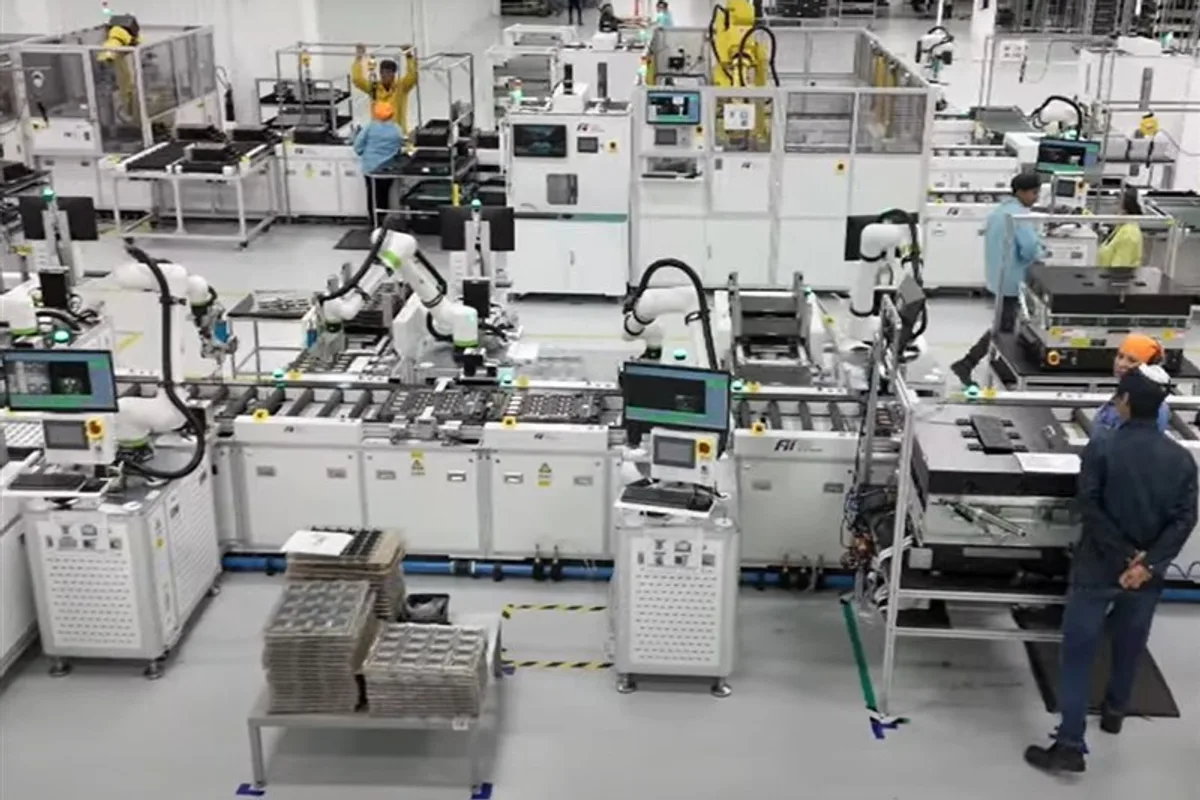
Young Liu rejects concerns about an AI bubble
Foxconn's chairman also addressed growing financial-market concerns about the sustainability of AI infrastructure spending.
Some investors have questioned whether the industry will generate enough revenue to justify the scale of investment in new computing capacity.
Young Liu said he does not consider the sector to be in a bubble.
He also forecast double-digit growth for Foxconn in 2027.
These statements reflect management's outlook rather than guaranteed future results.
Strong demand for industrial equipment does not prove that every downstream data center project will earn its expected return.
The economics of AI infrastructure depend on utilization, electricity costs, depreciation and the prices customers pay for computing services.
Those variables can change independently of a manufacturer's ability to deliver servers.
The distinction between current hardware demand and the long-term profitability of AI services remains important.
Robotics is another part of Foxconn's technology strategy
Foxconn also discussed its automation and robotics projects at the technology event.
The company said more than ten humanoid robots have been deployed at its Texas facilities for internal use.
It plans to expand their use beyond those locations.
Foxconn Industrial Internet has introduced wheeled robot designs intended for lifting, assembly and loading operations.
The group is also developing robotics capabilities using NVIDIA's GR00T foundation-model technology.
These programs provide additional context for Foxconn's industrial AI ambitions.
They are not confirmed elements of the new OpenAI collaboration.
Until the scope of that potential agreement is published, the robotics projects should remain separate from the partnership announcement.
A formal agreement will determine the commercial significance
The October 30 statements confirm that Foxconn and OpenAI are discussing additional cooperation.
They do not establish what the parties will ultimately commit to building or purchasing.
A future announcement will need to clarify the hardware scope, manufacturing locations, commercial obligations and implementation schedule.
It will also be important to determine whether the new arrangement goes beyond the non-binding purchase framework announced in November 2025.
An option to purchase hardware is not the same as a confirmed order.
This distinction will be central to evaluating any future financial implications for Foxconn.
The broader industrial trend is clear: advanced AI increasingly depends on an ability to manufacture and deploy complete computing systems, not merely acquire processors.
Foxconn wants to be one of the manufacturers supplying that physical infrastructure.
The meeting between Young Liu and Sam Altman confirms continuing interest on both sides. The commercial importance of the next collaboration will depend on its final terms and the hardware that is actually produced.