
 By Kilam
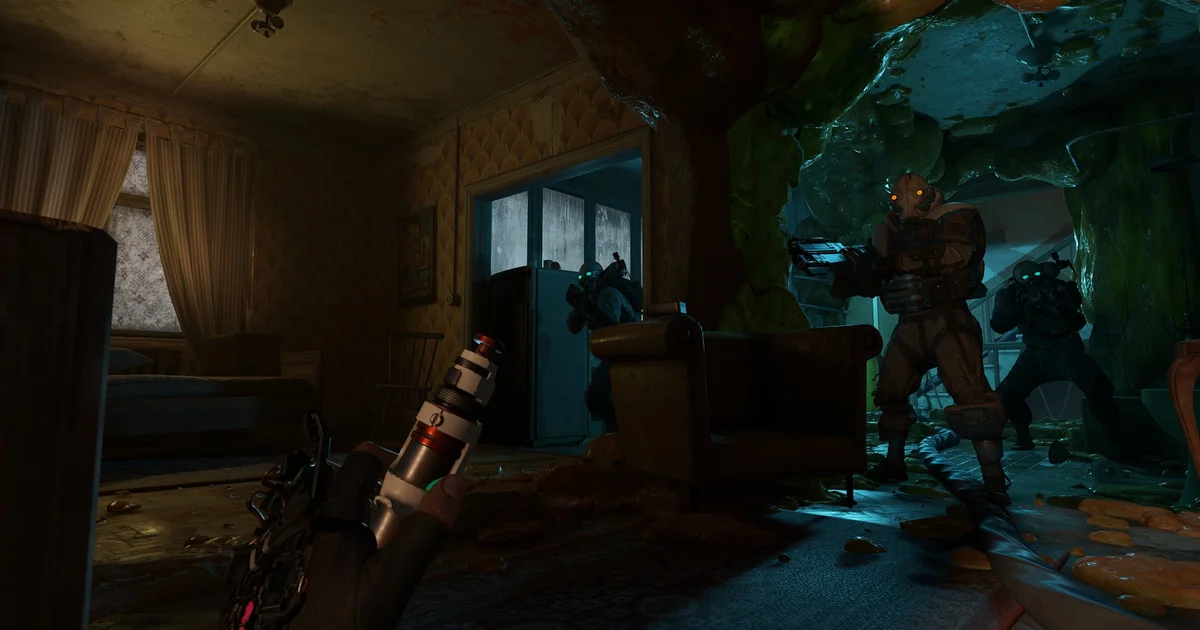
Rendering every part of a virtual reality image at equal quality can waste GPU resources when only a portion of the display requires the highest level of detail. Foveated rendering addresses that problem by allocating rendering work unevenly across the field of view.
Valve has now added a Foveated Rendering option to the desktop version of Half-Life: Alyx. It appears under Advanced Performance following the October 26, 2026 update.
The feature was already available for standalone Steam Frame gameplay following the September engine update. The latest patch specifically extends support to compatible desktop configurations.
GPU compatibility depends on the graphics API
Valve lists NVIDIA GTX 16-series and RTX 20-series GPUs or newer for DirectX operation. AMD users must launch Half-Life: Alyx with the -vulkan command-line argument to access the new feature on supported hardware.
The patch notes do not provide an exhaustive AMD GPU compatibility list, and they do not establish identical behaviour across every supported headset.
Foveated rendering reduces rendering effort in less visually important regions while preserving greater detail near a selected focal area. When eye tracking is available, that area can move according to where the user is looking.
Valve specifically recommends enabling headset eye tracking for the best results. This recommendation should not be confused with a statement that every compatible setup requires eye-tracking hardware.

The official notes leave several implementation details unspecified, including the precise peripheral quality levels, the dimensions of the higher-resolution region and expected gains for particular GPU and headset combinations.
As a result, the update establishes an additional rendering capability rather than a universal performance uplift.
GPU savings and perceived image quality
Foveated rendering is particularly relevant to VR because each headset frame must be produced within a demanding timing budget. Reducing shading or rendering work in selected regions can lower GPU cost under suitable conditions.
However, a rendering optimisation cannot eliminate unrelated CPU limitations or other pipeline bottlenecks. Its impact also depends on how well the system maintains image quality where users are looking.
For eye-tracked rendering, gaze tracking latency and the stability of the high-detail region are meaningful evaluation criteria. Fixed-region approaches introduce a different trade-off, as users can move their eyes without moving their heads.
These are general technical considerations, not independently confirmed problems with Valve's implementation.
The October patch contains no detailed frame-time comparisons or quality measurements that would establish a specific improvement across supported configurations.
Steam Frame gains stencil buffer tagging
The native Steam Frame version receives another rendering change: Valve has enabled stencil buffer tagging to improve reprojection quality.
Reprojection uses previously rendered information to help maintain a visually continuous headset presentation when the application cannot produce complete new frames at the display's target cadence.
A stencil buffer can identify regions or influence how particular elements are processed in the graphics pipeline. Tagging can therefore provide useful information to systems handling image reconstruction or reprojection.
Valve has not disclosed exactly how the new tags are assigned or processed in Half-Life: Alyx. It also has not published numerical improvements in frame rate, frame timing or reprojection artefacts.
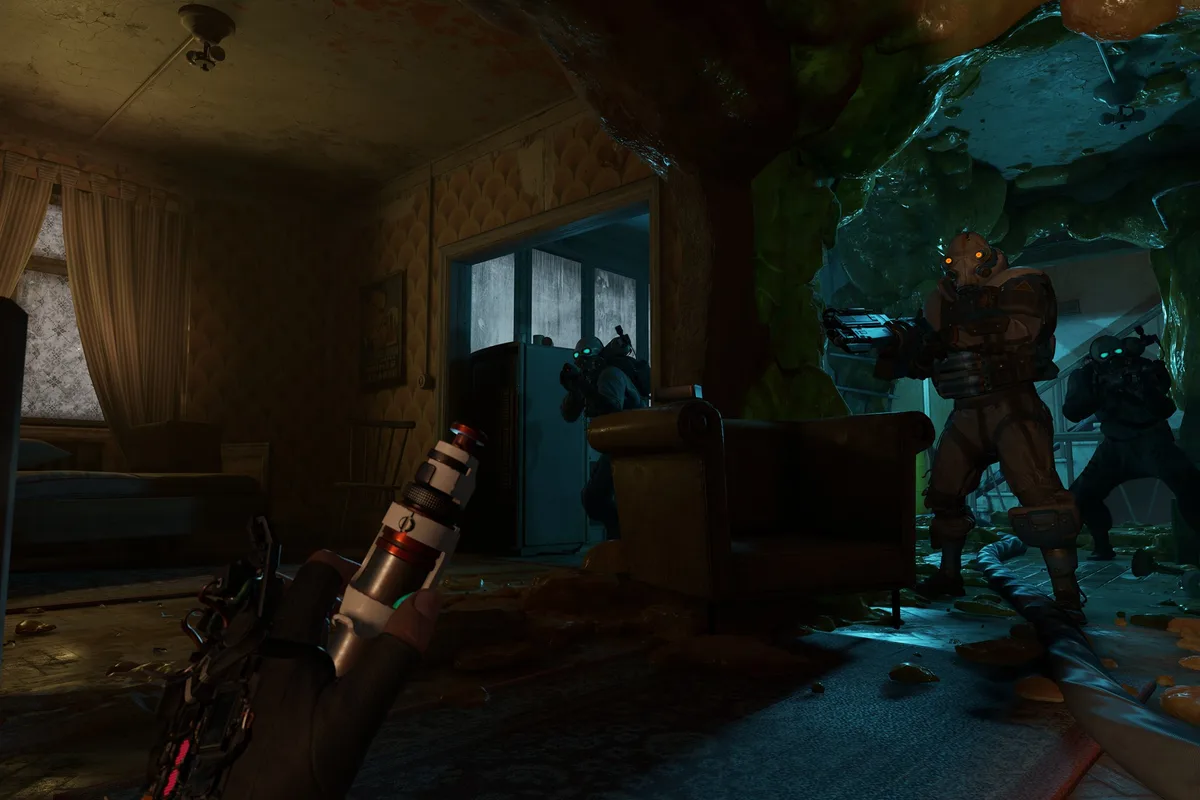
This update builds on September 14, when Valve introduced standalone Steam Frame support. That earlier release included an ARM64/aarch64 port, broad Source 2 engine optimisations, standalone foveated rendering and depth reprojection.
The October changes refine that implementation rather than introducing an entirely new standalone rendering architecture.
Additional stability fixes
The remaining changes resolve several rendering crashes affecting Steam Workshop content and fix cases in which the Gnome Alone achievement would fail to unlock.
Valve did not publish a detailed breakdown of the specific Workshop content responsible for the crashes.
The October patch follows other September maintenance releases addressing launch problems, Linux and Proton compatibility, and volumetric fog rendering issues.
Half-Life: Alyx remains available through Steam, with its new desktop foveated rendering option accessible under Advanced Performance on compatible hardware. Quantifying its technical benefits will require controlled GPU timing, image-quality and reprojection comparisons beyond the information in Valve's release notes.