
 By Camille
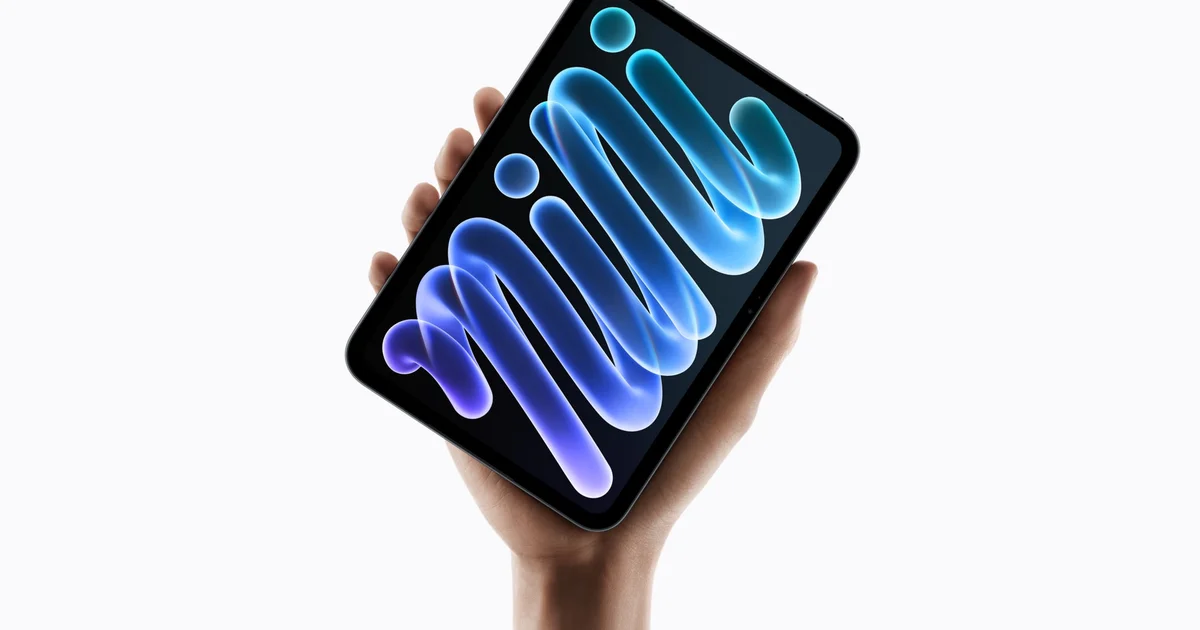
The iPad mini has always occupied an unusual position in Apple's tablet lineup.
It is too small to replace a laptop comfortably for many workflows, yet large enough to provide considerably more screen space than a smartphone.
Its appeal has primarily been portability rather than cutting-edge specifications.
With the model announced on October 26, 2026, Apple is changing that equation.
The smallest iPad now receives technologies previously associated with the company's more ambitious devices, starting with OLED.
The upgrade extends beyond the screen. Apple has introduced the A20 Pro chip, a thinner enclosure, environmental protection and a new audio system.
These improvements accompany a premium price: €759 in France or $699 in the United States for the entry-level Wi-Fi model.
OLED finally arrives on Apple's smallest tablet
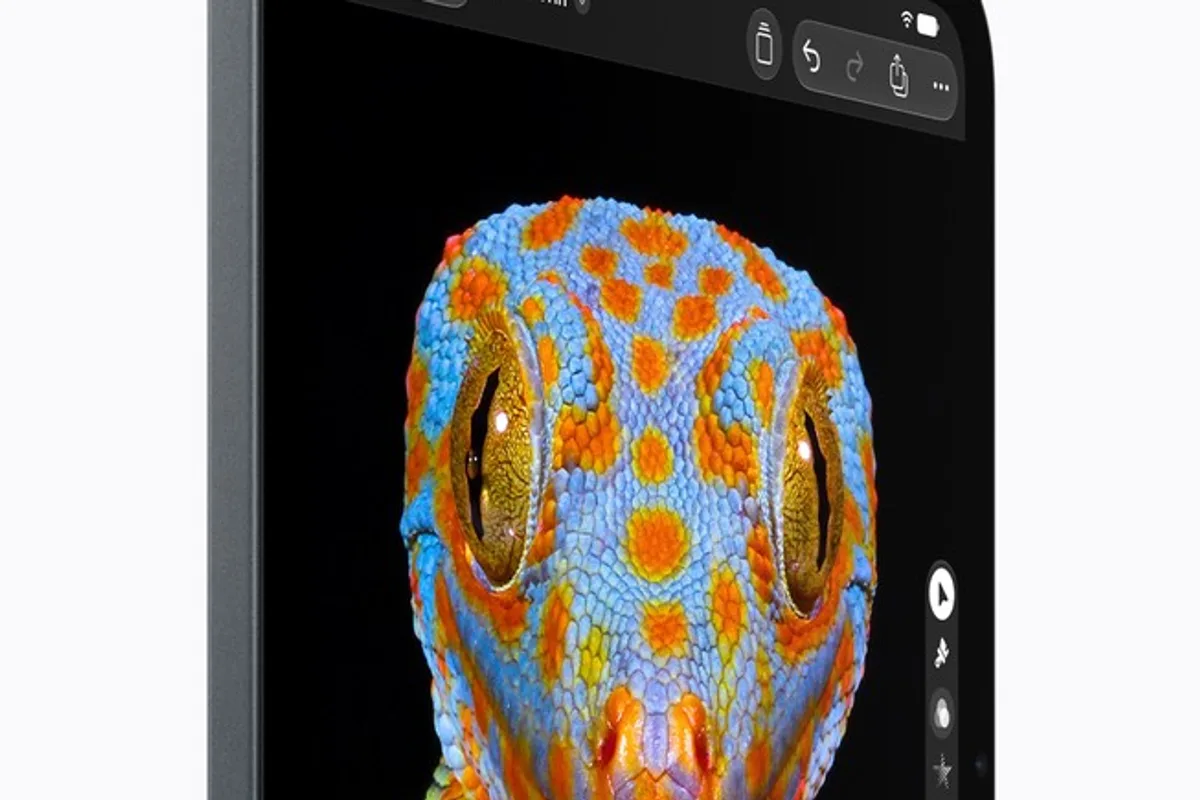
The most significant visual change is the replacement of the previous LCD with a Super Retina XDR OLED panel.
The display now measures 8.5 inches, compared with 8.3 inches on the previous generation.
Apple says it has reduced bezel thickness by 24%, allowing the screen to grow without substantially increasing the tablet's footprint.
OLED pixels produce their own light rather than relying on the backlighting system required by LCD panels.
This provides much deeper blacks and eliminates the local backlighting halos that can occur on LCD displays.
The change could be especially appealing for movies, games and content containing dark scenes.
Apple advertises a contrast ratio of 2,000,000:1 and a maximum HDR brightness of 1,200 nits.
The company also specifies 600 nits of full-screen brightness for both SDR and HDR content.
A minimum brightness of one nit may improve comfort when reading in dark environments.
These remain manufacturer specifications. Independent testing will need to evaluate color accuracy, sustained brightness and real-world display behavior.
A 60Hz display remains the biggest compromise
Despite the switch to OLED, Apple has not brought every iPad Pro display feature to the mini.
The new model remains limited to a maximum refresh rate of 60Hz, according to technical coverage from ComputerBase and The Verge.
It therefore does not support Apple's ProMotion technology, which offers adaptive refresh rates up to 120Hz on compatible devices.
This limitation does not affect OLED's ability to display deep blacks.
Instead, it affects how smoothly movement appears on screen.
Scrolling, animations and some games can feel smoother on a 120Hz display.
Compatible games can also display more distinct frames each second when the hardware renders them.
At this price, the limitation deserves attention.
It does not make the iPad mini unpleasant to use, but it clearly separates the compact tablet from Apple's Pro range.
Nano-texture glass becomes an option
Apple also introduces optional nano-texture glass.
The finish is designed to reduce reflections in brightly lit environments.
It may interest people who frequently work outdoors, read documents in difficult lighting or use their tablets for drawing.
However, the option is not offered on every configuration.
ComputerBase reports that nano-texture glass is restricted to the 256GB and 512GB models.
The entry-level 128GB version cannot be configured with it.
Nano-texture glass is not the same thing as a brighter display.
It primarily changes how reflected light is scattered.
Buyers who prioritize image clarity or contrast may wish to compare the two finishes directly before ordering.
A20 Pro provides a major performance upgrade
The new iPad mini uses Apple's A20 Pro chip, manufactured using a process described as 2-nanometer technology.
Apple specifies a CPU with up to six cores and a seven-core GPU.
The graphics architecture includes hardware-accelerated ray tracing and mesh shading.
According to the manufacturer, multithreaded CPU performance can be up to 60% faster than the previous generation.
Apple also claims up to 2.7 times the graphics performance in selected tests.
These improvements could benefit demanding games, creative applications and advanced image processing.
However, the claimed gains do not mean every application will run at the same proportionally higher speed.
Sustained performance will be particularly interesting to assess.
A powerful processor inside a 5.4mm tablet operates under significant thermal constraints.
Long-duration testing will therefore be more revealing than short benchmark runs.
The chip places considerable emphasis on AI
Apple is also highlighting A20 Pro's artificial intelligence capabilities.
Each GPU core features Neural Accelerators, while a dedicated Neural Engine handles additional processing.
The 512GB configuration includes two 16-core Neural Engines, providing a combined 32 cores.
Apple claims up to 4.5 times the AI performance of the previous iPad mini in selected workloads.
The hardware is intended to support applications that run models directly on the device.
Local processing can potentially reduce data transfers and dependence on a network connection for compatible tasks.
However, not every Apple Intelligence feature is processed entirely on the tablet.
Some requests use Apple's Private Cloud Compute infrastructure.
Practical benefits will depend on feature availability, language support and applications that make use of the new hardware.
A thinner design with IP67 protection
The physical design has also changed significantly.
The tablet's thickness has dropped from 6.3mm to 5.4mm.
Although the difference may sound small, it is meaningful for a device designed to be carried frequently and operated with one hand.
Two finishes are available: midnight and starlight.
Another important addition is IP67 protection against water and dust.
This may provide greater reassurance for people who use their tablets outdoors, at work or near water.
However, IP67 should not be interpreted as an invitation to use the tablet underwater regularly.
Standardized laboratory conditions do not represent every real-world exposure, particularly when liquids other than fresh water are involved.
Acoustic Display introduces an unusual speaker design
One of the more unexpected changes concerns audio.
Apple has introduced a system called Acoustic Display, integrating acoustic components with the display structure.
Specially designed woofers are intended to provide stronger bass.
Tweeters positioned between the glass and aluminum enclosure reproduce higher frequencies.
The arrangement also contributes to the tablet's sealed construction.
This is an interesting engineering approach for such a compact product, where space for conventional speakers is limited.
However, the manufacturer's description does not establish actual sound quality.
Voice clarity, tonal balance, loudness and distortion will require independent listening and measurements.
The front camera moves to the landscape edge
The iPad mini includes a 12-megapixel front camera with Center Stage.
Its position has changed to the longer edge of the tablet.
This gives the camera a more natural viewing angle during video calls in landscape orientation.
It is a practical improvement for FaceTime calls, meetings and collaborative work.
The rear camera remains a 12-megapixel wide-angle unit.
It supports Smart HDR 4 and video recording at up to 4K 60fps.
An adaptive True Tone flash also helps with photography and document scanning.
Actual image quality will need to be assessed through photographs and video recordings rather than sensor resolution alone.
Wi-Fi 7, Bluetooth 6 and Apple's C2 modem
Connectivity receives a substantial update.
The iPad mini includes Apple's N1 wireless networking chip.
It supports Wi-Fi 7, Bluetooth 6 and Thread.
Wi-Fi 7 can offer improved performance when paired with compatible networking equipment.
However, it does not guarantee faster internet access when the broadband connection or network itself is the limiting factor.
Cellular models use Apple's C2 modem.
The company claims up to 50% faster cellular data transfers compared with the previous-generation iPad mini.
The tablet uses eSIM for mobile connectivity.
These improvements may be particularly relevant to users relying on the iPad mini while traveling or working away from a fixed office.
iPadOS 27 expands the compact tablet's capabilities
The new device runs iPadOS 27 with Apple's latest intelligence features.
The operating system also introduces interface and productivity improvements.
Apple confirms support for extended external display mode with iPadOS 27.2.
On compatible setups, this allows users to go beyond simply mirroring the tablet's built-in screen.
That could be useful for someone who wants a compact device while traveling but occasionally needs a larger desktop workspace.
It does not automatically turn the iPad mini into a conventional laptop.
Application availability, peripheral support and iPadOS capabilities still define the experience.
The tablet remains compatible with Apple Pencil Pro and Apple Pencil USB-C.
This supports note-taking, annotation and drawing, depending on the selected stylus and its available features.
€759 in France: a small tablet with premium pricing
French pricing starts at €759 for the Wi-Fi version.
The Wi-Fi + Cellular model begins at €929.
Storage configurations include 128GB, 256GB and 512GB.
Education pricing starts at €699.
The new TechWoven Smart Folio costs €89, while Apple Pencil Pro is priced at €149.
Adding accessories can therefore increase the total cost significantly.
In the United States, prices begin at $699 for Wi-Fi and $849 for Wi-Fi + Cellular.
These regional prices should not be treated as direct equivalents without accounting for local pricing policies and taxes.
At this level, the iPad mini is not simply an inexpensive companion tablet.
It is a premium product aimed at buyers who place particular value on compactness.
Someone mainly watching videos or browsing the web at home may find a larger, less expensive tablet more practical.
For professionals and creators who carry their device throughout the day, the smaller form factor may justify some of the additional cost.
Should existing iPad mini owners upgrade?
The move to OLED and A20 Pro is substantial enough to interest owners of older generations.
The display promises deeper blacks, while the new processor offers additional headroom for demanding applications.
IP67 protection and the repositioned front camera also provide practical improvements.
However, the decision should depend on actual needs.
For reading, note-taking and lightweight applications, an older supported iPad mini may remain perfectly adequate.
The 60Hz limitation also reduces the appeal of the upgrade for users who prioritize refresh rate.
Display quality, battery endurance and sustained performance still need independent testing on commercial units.
It would be premature to conclude that the new model improves every aspect of the experience.
Apple makes its smallest tablet much more ambitious
This iPad mini represents considerably more than a routine processor refresh.
OLED, A20 Pro, Acoustic Display and IP67 protection significantly change the product's positioning.
Apple is bringing some of its more advanced technologies to its smallest tablet while preserving the defining characteristic of the series: portability.
The main question remains value.
At €759, the lack of ProMotion 120Hz is difficult to ignore, even if it does not diminish OLED's other advantages.
Preorders open October 28, with retail availability scheduled for November 6, 2026.
The new iPad mini now has an unusually ambitious specification sheet for its size. Independent testing will determine whether the everyday experience justifies a price that is anything but miniature.